
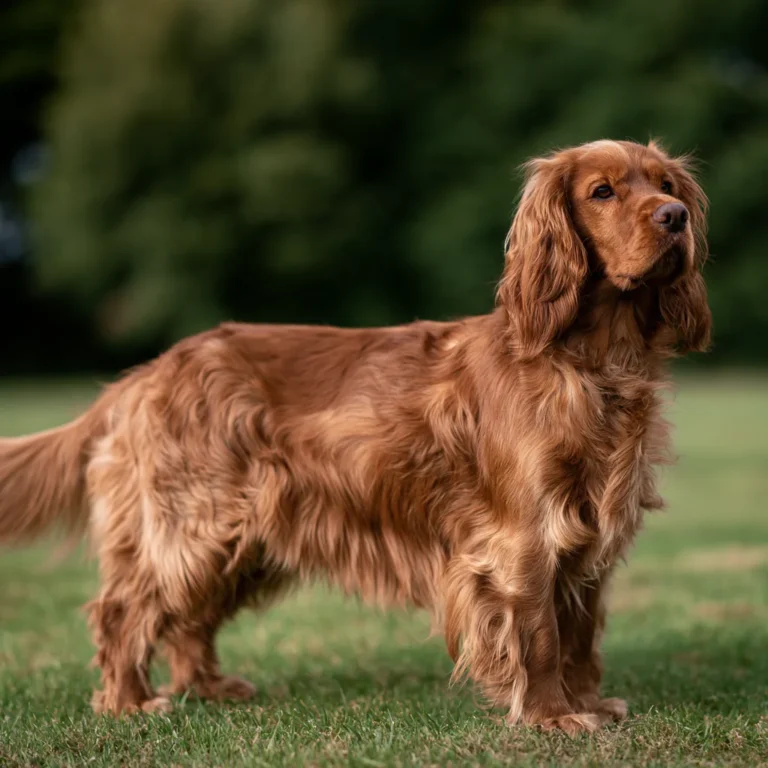
Using a Sussex Spaniel stud dog
Choosing a Sussex Spaniel stud dog matters more than in most breeds, because every mating shapes a very small gene pool. Before booking, ask to see the dog's RKC registration, his BVA/KC hip score and his BVA/KC/ISDS eye certificate, and check the results on the RKC Health Test Results Finder. Run the proposed pairing through the RKC's online inbreeding coefficient calculator and aim for a figure at or below the breed average; the SSA encourages matings whose puppies share fewer genes than the breed norm. The club advises novices to have an experienced breeder help with the mating, as Sussex are heavy, strong dogs, and to confirm the stud fee arrangements in writing beforehand. Its Code of Ethics also asks stud owners to satisfy themselves that each bitch is suitable.
Health tests for a Sussex Spaniel stud
The RKC's pre-breeding advice for the Sussex Spaniel puts genetic diversity first. Every Sussex traces back to a small post-war group, so avoiding closely related matings is the breed's Good Practice recommendation. The SSA reports that fewer puppies are being born and litters are getting smaller, and its Sussex Genetics Project, run with the Roslin Institute and the RKC, is DNA testing UK-resident dogs to build an evidence-based plan for managing the gene pool.
As Best Practice, the RKC recommends an eye examination and hip scoring under the schemes listed below. The SSA strongly recommends hip scoring all breeding stock and gives the breed's average hip score as 41; the RKC and BVA advise breeding from dogs scoring around or below the breed median, so compare a parent's score with the Sussex figure rather than with other breeds. The club also flags ear problems, skin allergies and, in a small number of dogs, bloat.
The RKC places the breed in Breed Watch Category 1 (no breed-specific points of concern for show judges) and applies no extra breed-specific breeding restrictions.
- Prioritising genetic diversity (RKC Good Practice): check the litter's coefficient of inbreeding against the breed average
- Eye testing using the BVA/KC/ISDS Eye Scheme (RKC Best Practice)
- Hip testing (for hip dysplasia) using the BVA/KC Hip Dysplasia Scheme (RKC Best Practice); dogs must be at least 12 months old
- Breed Watch: Category 1
- The RKC does not currently offer a breed-specific DNA testing package for the Sussex Spaniel
More for Sussex Spaniel owners and breeders
- Sussex Spaniel: breeders
- Sussex Spaniel: puppies for sale
- Sussex Spaniel: stud dogs
- All Gundog group breeds
- Vulnerable native breeds
Official sources
- Spaniel (Sussex) breed information - The Royal Kennel Club
- Spaniel (Sussex) breed standard - The Royal Kennel Club
- Sussex Spaniel Association
- Sussex Spaniel Association - health advice and guidance
- Sussex Spaniel Association - puppies
- Eye Scheme (BVA/KC/ISDS) - British Veterinary Association
- Hip Dysplasia Scheme (BVA/KC) - British Veterinary Association
- Vulnerable native breeds - The Royal Kennel Club
- Inbreeding coefficient calculator - The Royal Kennel Club