
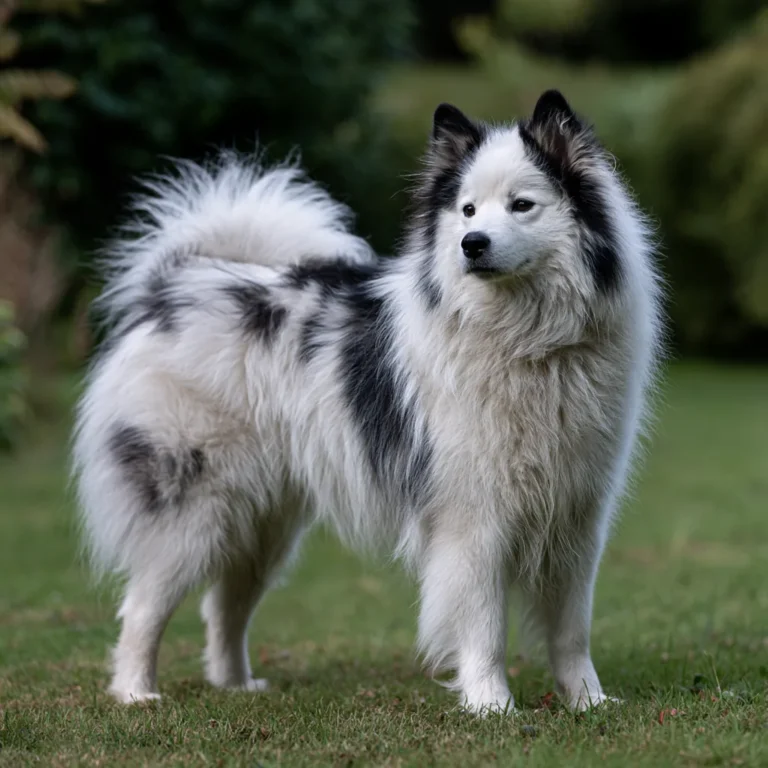
Buying a Canadian Eskimo Dog puppy
This page lists Canadian Eskimo Dog puppies for sale and planned litters from breeders on caninebreeder.co.uk. The breed is rare in Britain and most puppies go to people already on a waiting list, so register interest early and be prepared to wait. Listings show what each breeder has supplied, so verify it: look up both parents' hip and eye results on the RKC Health Test Results Finder and ask to see DM DNA certificates, which the Canadian Eskimo Dog Club of Great Britain expects of its members. Be honest with yourself about the commitment: more than two hours of exercise a day once adult, a large garden, heavy seasonal shedding and a powerful sled dog that may have a prey drive. Many UK owners work their dogs in dry-land mushing and canicross. Visit the litter, meet the mother and read our buyer safety guide before handing over money.
Health tests to ask about
The Royal Kennel Club's health guidance for the Canadian Eskimo Dog lists prioritising genetic diversity as good practice and hip scoring under the BVA/KC Hip Dysplasia Scheme as best practice. There is no breed-specific DNA test package, although individual DNA tests are available. The breed is in Breed Watch Category 1, meaning no breed-specific points of concern have been flagged for show judges.
The Canadian Eskimo Dog Club of Great Britain sets a higher bar for its members. Since 2018 its code of ethics has required hip scoring, eye testing and a DNA test for degenerative myelopathy (DM) before breeding, with a long coat gene test advised. The club says the breed has not shown serious signs of genetic disease so far. Its health page covers cryptorchidism, inherited cataracts, for which it calls yearly eye tests of breeding stock essential, and DM, for which carriers have been found and only clear or carrier dogs should be bred from. It also lists less common problems including bloat, detached retina, Addison's disease, allergies, fertility problems and cancer, and runs a breed health survey. Health tests reduce risk but are not a guarantee. You can look up recorded results on the RKC Health Test Results Finder.
- BVA/KC Hip Dysplasia Scheme (RKC best practice; required by the club's code of ethics)
- Genetic diversity: check the mating with the RKC inbreeding coefficient calculator (RKC good practice)
- BVA/KC/ISDS Eye Scheme (required by the club's code of ethics)
- DNA test: degenerative myelopathy (DM) (required by the club's code of ethics)
- DNA test: long coat (advised by the club)
- DNA test package: none listed by the RKC
- Breed Watch: Category 1
More for Canadian Eskimo Dog owners and breeders
- Canadian Eskimo Dog: breeders
- Canadian Eskimo Dog: puppies for sale
- Canadian Eskimo Dog: stud dogs
- All Working group breeds
- Sled dogs and dryland mushing
Official sources
- Canadian Eskimo Dog breed information u2013 The Royal Kennel Club
- Canadian Eskimo Dog breed standard u2013 The Royal Kennel Club
- Canadian Eskimo Dog Club of Great Britain
- Canadian Eskimo Dog Club of Great Britain u2013 About the breed
- Canadian Eskimo Dog Club of Great Britain u2013 History to present day
- Canadian Eskimo Dog Club of Great Britain u2013 Health
- Canadian Eskimo Dog Club of Great Britain u2013 Breed health survey
- Canadian Eskimo Dog Club of Great Britain u2013 Puppies
- Canadian Eskimo Dog Club of Great Britain u2013 Working section
- BVA/KC Hip Dysplasia Scheme u2013 British Veterinary Association
- BVA/KC/ISDS Eye Scheme u2013 British Veterinary Association
- Health Test Results Finder u2013 The Royal Kennel Club
- Inbreeding coefficient calculators u2013 The Royal Kennel Club
- Dog breeding licence (England) u2013 GOV.UK