
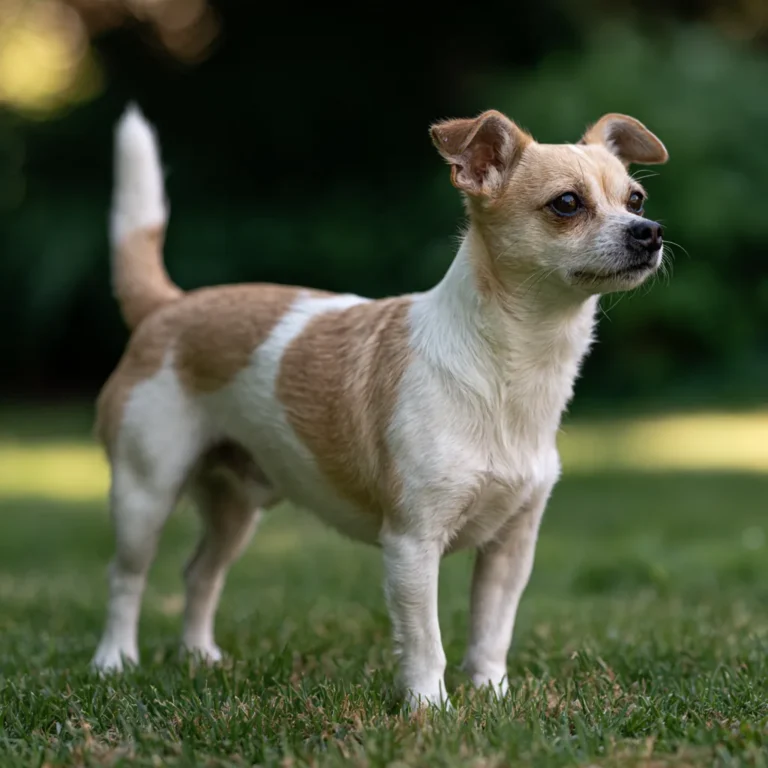
Buying a Jack Chi puppy
Looking at Jack Chi puppies for sale means weighing up a cross between a sturdy working terrier and the breed the RKC calls the smallest in the world. There is no standard to tell you what an adult will look like, and littermates can differ in size and shape, so meet both parents if you can and ask how big earlier litters from the same pairing grew. Before paying a deposit, look at the Jack Russell's PLL, LOA and SCA results and both parents' eye certificates, and ask whether the Chihuahua parent has been assessed under the RKC breathing scheme. Ask the breeder about the puppies' bites and teeth, since dental faults are on the Chihuahua's Breed Watch list. See the puppies with their mother, confirm microchipping by eight weeks and take away written care notes. The RKC Activity Register is open to crossbreeds, including the Jack Chi, for activities such as agility.
Health tests to ask about
As a crossbreed, the Jack Chi has no RKC health standard or Breed Watch category of its own. The RKC advises buyers of crossbreed puppies to ask which breed-related health tests both parents have had, using the lists for each parent breed as the yardstick.
For the Jack Russell Terrier, the RKC lists a DNA test for primary lens luxation, a painful inherited eye condition that can lead to blindness, as Good Practice. DNA tests for two forms of ataxia and eye examination under the BVA/KC/ISDS scheme are Best Practice.
For the Smooth Coat Chihuahua, eye examination is Best Practice. In August 2026 the RKC also recognised a breathing test for brachycephalic obstructive airway syndrome (BOAS) as Best Practice, using the Respiratory Function Grading scheme it runs with the University of Cambridge; it is due to be added formally to the breed's health standard from January 2027. Grading starts at 12 months and is repeated every two years while a dog is bred from. The Chihuahua is in Breed Watch Category 2, with judges asked to look out for faulty bites and teeth, retained puppy teeth, wry jaw and an overly short muzzle. The RKC does not register Chihuahua puppies from a merle parent because of risks to hearing and sight.
- Jack Russell Terrier parent, Good Practice: DNA test for primary lens luxation (PLL)
- Jack Russell Terrier parent, Best Practice: DNA test for late onset ataxia (LOA)
- Jack Russell Terrier parent, Best Practice: DNA test for spinocerebellar ataxia (SCA)
- Jack Russell Terrier parent, Best Practice: eye testing using the BVA/KC/ISDS Eye Scheme
- Chihuahua (Smooth Coat) parent, Best Practice: eye testing using the BVA/KC/ISDS Eye Scheme
- Chihuahua (Smooth Coat) parent, Best Practice: breathing test for BOAS using the KC Respiratory Function Grading scheme (recognised August 2026, to be added formally to the health standard from January 2027)
- Breed Watch: none for the Jack Chi; Jack Russell Terrier Category 1; Chihuahua (Smooth Coat) Category 2
More for Jack Chi owners and breeders
Official sources
- Jack Russell Terrier: breed information, Royal Kennel Club
- Chihuahua (Smooth Coat): breed information, Royal Kennel Club
- What is a crossbreed dog?, Royal Kennel Club
- Respiratory Function Grading Scheme, Royal Kennel Club
- DNA test: primary lens luxation (PLL), Royal Kennel Club
- BVA Canine Health Schemes: Eye Scheme
- Breed Watch: Chihuahua (Smooth Coat) Category 2, Royal Kennel Club
- Dog breeding licence (England), GOV.UK