
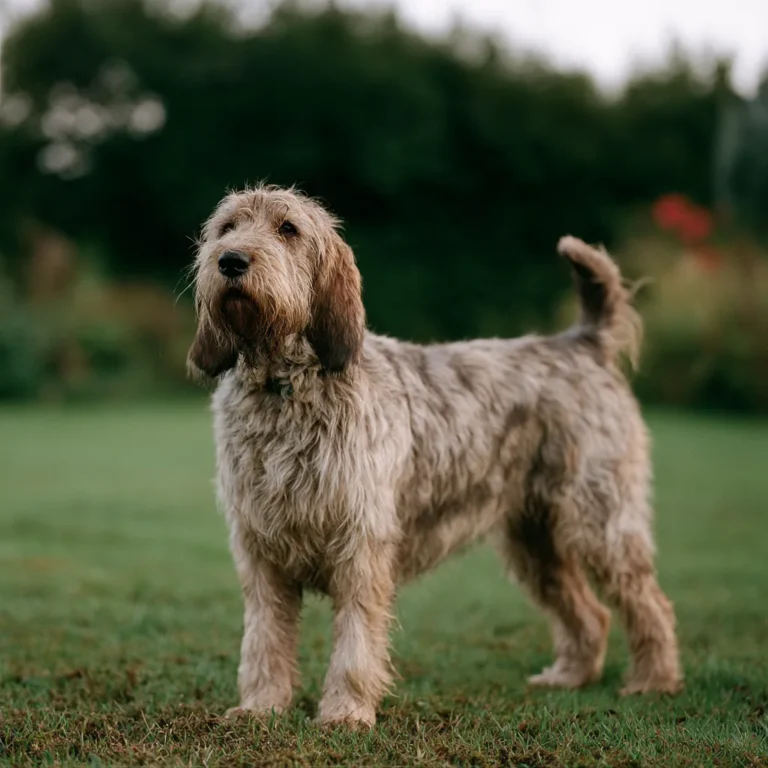
Buying an Otterhound puppy
Looking for Otterhound puppies for sale? Very few litters are born in the UK each year, so finding one usually means registering your interest early and being patient. The breeders listed here show their kennel name, website, social media, location and categories, so you can contact them directly and ask about planned litters. Ask to see hip and elbow results and Glanzmann's thrombasthenia status for both parents, and ask whether there has been any epilepsy in the family. Expect to visit more than once, and to be asked about your garden, fencing and experience with scent hounds. We are an independent directory and do not inspect breeders, so please read our buyer safety guide and make your own checks.
Health tests to ask about
At Good Practice level, the RKC Health Standard for the Otterhound lists three points: prioritising genetic diversity, hip screening under the BVA/KC Hip Dysplasia Scheme and elbow screening under the BVA/KC Elbow Dysplasia Scheme. Both X-rays can be taken once a dog is at least one year old.
At Best Practice level, it lists a DNA test for Glanzmann's thrombasthenia. This inherited recessive disorder stops the blood clotting properly. Signs usually appear before a year old and include bleeding gums as the adult teeth come through, easy bruising, nosebleeds, and blood in urine or faeces. Since 6 January 2025, the RKC has only registered imported Otterhounds proven clear or carrier, or with hereditary clear status. Identified carriers may only be mated to a hound that is clear by DNA test or by descent.
The RKC breed page also points to a breed club health scheme. The Otterhound Club keeps a list of declared fitters (hounds that have had seizures) with breeding advice, publishes hip and elbow score tables, and has a Breed Health Co-ordinator and a health sub-committee that produces an annual health report. The breed is in Breed Watch Category 1, so no conformation concerns are singled out for judges. Testing reduces risk but cannot guarantee a healthy puppy.
Health tests and schemes for the Otterhound:
- BVA/KC Hip Dysplasia Scheme (RKC Good Practice)
- BVA/KC Elbow Dysplasia Scheme (RKC Good Practice)
- Prioritising genetic diversity (RKC Good Practice)
- DNA test for Glanzmann's thrombasthenia (RKC Best Practice; imported dogs must be tested to be registered)
- Otterhound Club health scheme: list of declared fitters (referenced on the RKC breed page)
- Breed Watch: Category 1
More for Otterhound owners and breeders
- Otterhound: breeders
- Otterhound: puppies for sale
- Otterhound: stud dogs
- All Hound group breeds
- Vulnerable native breeds
Official sources
- Otterhound breed information - Royal Kennel Club
- Otterhound breed standard - Royal Kennel Club
- Breed Watch Category 1 - Royal Kennel Club
- DNA test for Glanzmann's thrombasthenia - Royal Kennel Club
- The Otterhound Club
- So you want an Otterhound? - The Otterhound Club
- Health - The Otterhound Club
- Glanzmann's thrombasthenia - The Otterhound Club
- List of fitters and breeding advice - The Otterhound Club
- List of breeders - The Otterhound Club
- History of the Otterhound - The Otterhound Club
- Hip Dysplasia Scheme - British Veterinary Association
- Elbow Dysplasia Scheme - British Veterinary Association
- Vulnerable native breeds - Royal Kennel Club
- Inbreeding coefficient calculator - Royal Kennel Club
- Animal Welfare (Licensing of Activities Involving Animals) (England) Regulations 2018, Schedule 1