Breed dogs for assistance dogs? Advertise here
Buyers and trainers use this page to find breeders whose lines do this work. List your kennel free, tick the industries your dogs work in, and advertise litters and stud dogs from proven working lines.
No breeders are listed here yet, so the first profiles get the page to themselves.
- Free basic profile: your breeder or company name, website, social media, location, breeds and industries.
- Litters and stud dogs advertised in their own sections, never mixed with puppies for sale.
- Premium showcase for your services and prices, previous customers, awards, video, gallery and health certificates, with your phone and email shown to buyers.
- Sponsored articles about your breed or industry, written and published by our team.
- Featured placement at the top of this page, labelled as sponsored.
Is it free to advertise here?
Yes. A breeder profile and your litter and stud dog adverts are free. Premium profiles, featured placement and sponsored articles are optional paid extras; see pricing.
Do I need a licence to advertise puppies?
In England you need a dog breeding licence from your council if you breed three or more litters in 12 months or breed and sell dogs as a business, and Wales, Scotland and Northern Ireland have their own schemes. Licensed breeders show their licence number and issuing council on every advert. Puppies must be at least eight weeks old before they go to new homes.
Is my listing already here?
We add licensed breeders from councils' public registers. Search for your kennel name; if it is listed you can claim it and edit everything.
About assistance dogs
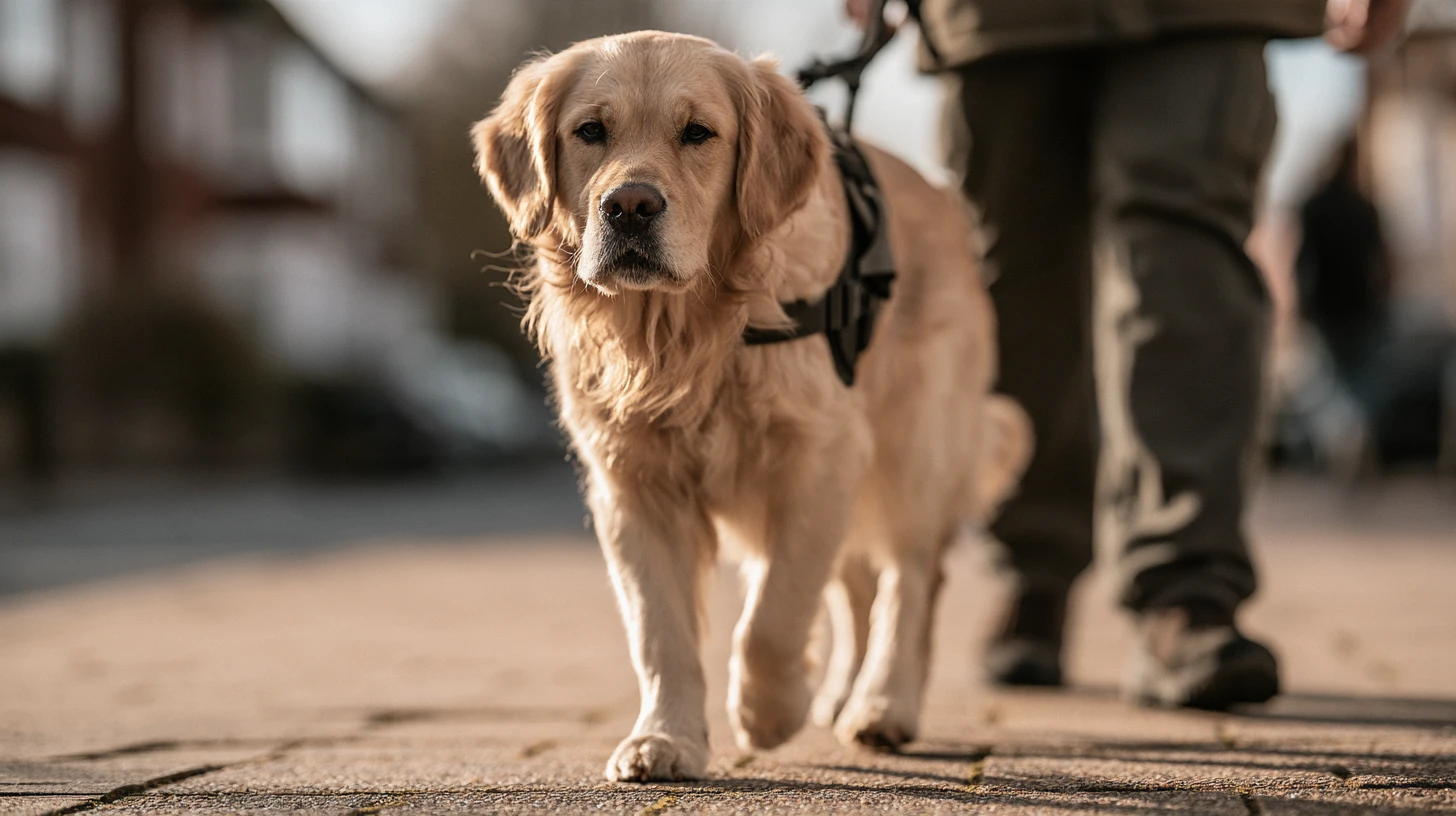
Assistance dogs are trained to carry out tasks for a disabled person: guiding someone with sight loss, alerting a deaf person to sounds, fetching dropped items, opening doors, or steadying a handler on stairs. In Britain no breeder sells a finished guide dog, hearing dog or mobility dog, and this hub does not pretend otherwise. It explains how assistance dogs are actually produced here, and the honest ways a breeder can be part of that.
What this discipline is
“Assistance dog” is the term used in UK law; “service dog” is the American equivalent. The Equality Act 2010 gives a disabled person with an assistance dog the right to be accompanied by the dog in shops, restaurants, taxis and other services. There is no official UK register, licence or certificate for assistance dogs. Assistance Dogs UK (ADUK) issues identification booklets only for dogs trained by its member organisations; an owner-trained dog has the same legal rights but cannot get an ADUK booklet. Any seller offering a “certified assistance dog” is therefore selling something that does not exist in UK law.
The main types are guide dogs for people with sight loss, hearing dogs for deaf people, mobility and disability assistance dogs, autism assistance dogs and medical alert dogs, which have their own hub on this site.
Who trains or supplies these dogs in the UK
Guide Dogs breeds its own dogs. Its National Centre at Bishops Tachbrook, near Leamington Spa, breeds up to 1,500 puppies a year. The breeding dogs live in volunteers’ homes as brood bitches and stud dogs, returning to the centre for mating, boarding and sometimes whelping; every puppy visits the centre at six weeks before going to a volunteer puppy raiser for about a year. Stud dog holders need to live within roughly an hour’s drive of the centre, and a brood bitch stays on the programme for around six years.
Hearing Dogs for Deaf People also breeds its own puppies, and says it buys carefully chosen puppies from responsible outside breeders, collecting them at eight weeks or older after a temperament and health assessment. Dogs for Good runs volunteer breeding stock holder roles in the same way.
ADUK lists 15 full member organisations accredited by Assistance Dogs International and/or the International Guide Dog Federation, among them Guide Dogs, Hearing Dogs, Canine Partners, Dogs for Good, Support Dogs, Medical Detection Dogs, Dog A.I.D., Dogs for Autism and Veterans With Dogs, plus candidate organisations working towards accreditation. Each member trains or sources its own dogs. Support Dogs says about a quarter of the dogs it trains come from rescue centres or as unwanted pets. Dog A.I.D. takes a different route altogether: it coaches physically disabled people to train their own pet dog.
So the supply chain is: charity breeding programmes, selected puppies bought by charities from outside breeders, rescue dogs, and owner-training. A breeder’s place in that chain is at the puppy end, never the finished-dog end.
Breeds and lines
Labradors, Golden Retrievers and German Shepherds have long been the most common pure breeds on the Guide Dogs programme, and the Golden Retriever crossed with the Labrador has historically been its most successful guide dog; Curly Coated Retrievers and Standard Poodles are also on the programme. Hearing Dogs favours Cocker Spaniels, Labradors, Miniature Poodles and Cocker-Poodle crosses.
What these lines share is a steady, biddable temperament, low reactivity to noise and crowds, and sound health: hip and elbow scoring through the BVA/KC schemes, eye testing, and the DNA tests set out for each breed in the Royal Kennel Club Health Standard. A breeder whose dog is a volunteer-held brood bitch or stud dog for a charity, or who has sold puppies into a charity programme, can state that as a fact about the line. It is not a claim that the next litter will be assistance dogs.
What a buyer should ask a breeder
- Which organisation, if any, has taken puppies from your lines, and can I check that with them?
- What are the sire’s and dam’s hip and elbow scores, eye test results and breed-specific DNA results?
- How are your puppies raised: in the house, exposed to visitors, traffic noise and different surfaces?
- Are you licensed by your local council, if the number of litters you breed requires it?
- Are you clear that you are selling a pet with potential, not a working dog?
Walk away from anyone who describes a puppy as a trained, registered or “certified” assistance dog, or who suggests the puppy will automatically qualify with a charity.
What breeders can list here
Breeders in this hub can describe their breed, their health-test results, the temperament of their lines, any volunteer role with a charity breeding programme, and any puppies placed with an assistance dog organisation. They may not describe puppies as assistance dogs, service dogs, trained dogs or certified dogs, and Canine Breeder does not supply or vet finished working dogs of any kind. Canine Breeder is an independent directory and is not connected to Guide Dogs, Hearing Dogs, ADUK or any of its members.
If you breed the calm, healthy lines that assistance dog charities look for, or hold a brood bitch or stud dog for one of them, we would like your listing in this discipline.
Breeds used for assistance dogs
Specialisations in assistance dogs
- Assistance dogs for children with disabilities in the UK
- Assistance-dog breeding programmes and puppy supply
- Autism assistance dogs in the UK: how they are trained and where they come from
- Dual-purpose assistance dogs for people with sight and hearing loss
- Guide dogs for the blind: how they are bred and the breeds behind them
- Hearing dogs for deaf people: breeds, puppies and training
- Mobility assistance dogs in the UK: charities, breeds and breeders
- Owner-trained assistance dogs in the UK
- PTSD assistance dogs for veterans in the UK