Breed dogs for guide dogs for the blind: how they are bred and the breeds behind them? Advertise here
Buyers and trainers use this page to find breeders whose lines do this work. List your kennel free, tick the industries your dogs work in, and advertise litters and stud dogs from proven working lines.
No breeders are listed here yet, so the first profiles get the page to themselves.
- Free basic profile: your breeder or company name, website, social media, location, breeds and industries.
- Litters and stud dogs advertised in their own sections, never mixed with puppies for sale.
- Premium showcase for your services and prices, previous customers, awards, video, gallery and health certificates, with your phone and email shown to buyers.
- Sponsored articles about your breed or industry, written and published by our team.
- Featured placement at the top of this page, labelled as sponsored.
Is it free to advertise here?
Yes. A breeder profile and your litter and stud dog adverts are free. Premium profiles, featured placement and sponsored articles are optional paid extras; see pricing.
Do I need a licence to advertise puppies?
In England you need a dog breeding licence from your council if you breed three or more litters in 12 months or breed and sell dogs as a business, and Wales, Scotland and Northern Ireland have their own schemes. Licensed breeders show their licence number and issuing council on every advert. Puppies must be at least eight weeks old before they go to new homes.
Is my listing already here?
We add licensed breeders from councils' public registers. Search for your kennel name; if it is listed you can claim it and edit everything.
About guide dogs for the blind: how they are bred and the breeds behind them
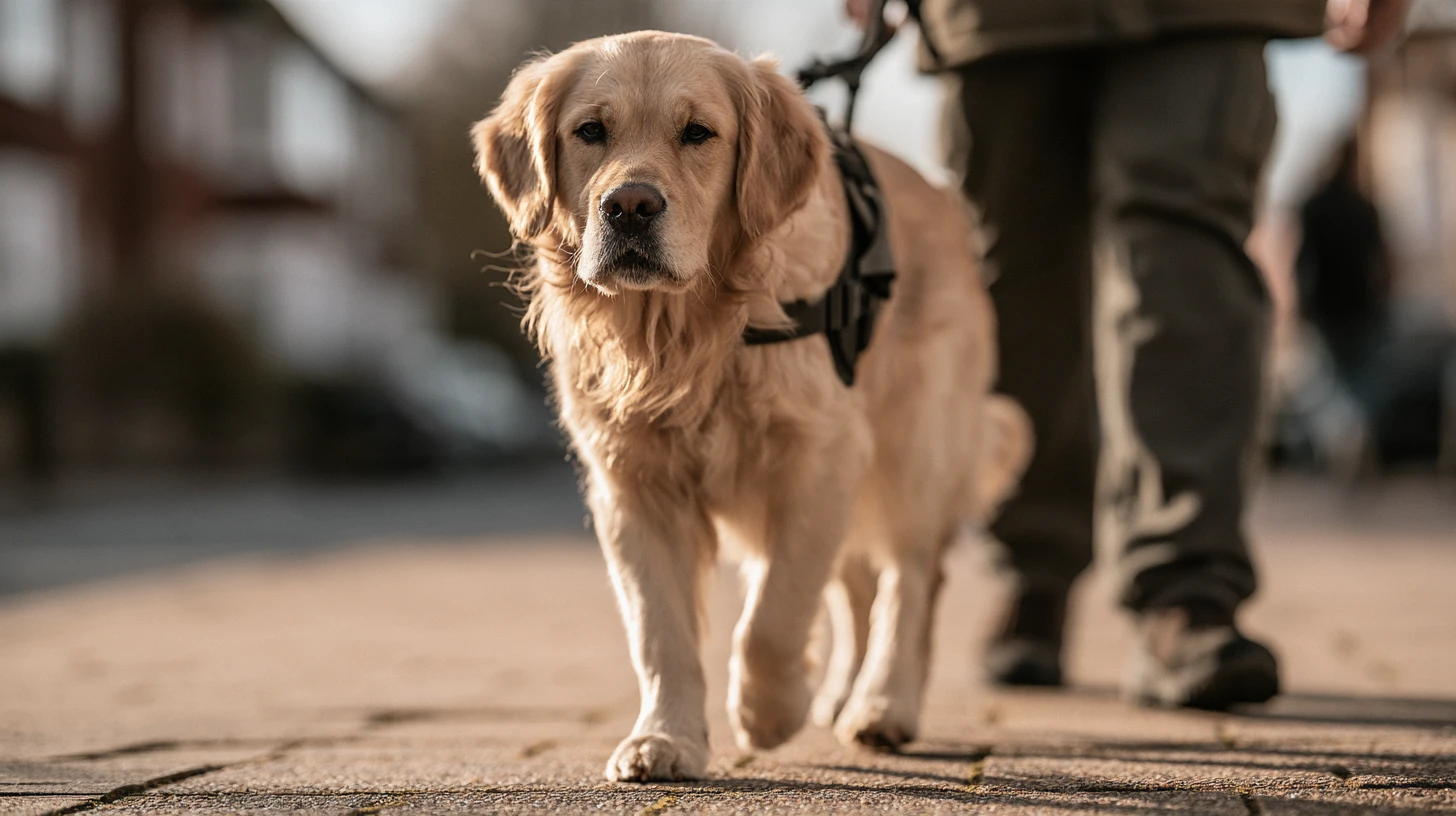
Guide dogs for blind and partially sighted people are the best-known assistance dogs in the UK. This page explains how guide dogs are bred, which guide dog breeds are used and what that means if you are looking for guide dog breeders in the UK. Trained guide dogs are never sold: the charity breeds, raises, trains and matches them, and the breeders listed on Canine Breeder do not supply them.
What this work involves
A guide dog helps a person with sight loss get around safely and independently. The owner is the navigator and decides the route and when to cross the road; the dog walks in a straight line from kerb to kerb, guides its owner around people, obstacles and trip hazards, and finds kerbs, doors, steps and crossings.
The work needs a dog that stays calm in traffic and crowds, ignores distractions while working, and is physically sound enough to work for years: Guide Dogs puts the average working life at about seven years. At the end of 2024 there were 3,197 working guide dog partnerships in the UK.
Who trains and supplies these dogs in the UK
Guide Dogs (The Guide Dogs for the Blind Association) breeds its own dogs and is a founding member of the International Guide Dog Federation (IGDF). Its National Centre near Leamington Spa, Warwickshire, opened in 2011, has room to breed up to 1,500 guide dog puppies a year and has bred almost 11,000 so far.
- Most litters are born in the homes of volunteer Breeding Dog Holders.
- At around eight weeks, puppies have health checks at the National Centre, then live with a volunteer Puppy Raiser for 12 to 16 months.
- Formal training starts at about 14 months at a regional centre and usually lasts around six months.
- Dogs are matched with their new owner at about two years old.
The charity says each guide dog costs £77,000 to breed, raise and train, plus £25,000 to support the partnership through its working life. The service is funded by donations, and Guide Dogs covers its dogs’ food and vet bills. Its breeding code allows it, from time to time, to offer its stud dogs for use on outside bitches under an agreed contract; that is the main formal link between the programme and private breeders.
The Seeing Dogs Alliance in Gillingham, Kent, also trains dogs to guide blind and partially sighted adults. Assistance Dogs UK (ADUK) is the coalition of charities accredited by Assistance Dogs International (ADI) and/or the IGDF.
Breeds and lines
Guide Dogs uses the Labrador Retriever, Golden Retriever and German Shepherd Dog, plus several crosses: Labrador x Golden Retriever, Golden Retriever x German Shepherd, Poodle x Labrador and Curly Coated Retriever x Labrador. More than 60% of its working guide dogs are Labrador x Golden Retriever crosses.
So how are guide dogs bred? Parents are chosen using health and behaviour records from their ancestors, siblings and offspring, and the charity monitors genetic diversity across its breeding population. A private breeder’s Labrador or Golden Retriever litter may share the breeds and the temperament goals, but those puppies have not been through that selection.
What to ask a breeder
- Which health tests have both parents had? Ask for BVA/RKC hip and elbow results, a current eye certificate and breed-relevant DNA tests. For a cross, ask about both parents; the BVA schemes screen crossbreeds as well as pedigree dogs.
- Can I meet the mother, and how does she behave in traffic, in crowds and around other dogs?
- Has any dog from your lines worked with an assistance dog charity, and how do you know?
- How do you socialise puppies before eight weeks?
- If you hold a council breeding licence, can I see it?
Legal and welfare notes
In England, Scotland and Wales, the Equality Act 2010 means guide dog owners can use almost all premises and transport with their dogs, and taxi drivers must carry an assistance dog at no extra charge. In Northern Ireland the Disability Discrimination Act 1995 applies. There is no UK government register or certificate for assistance dogs. ADUK members issue their clients an ID booklet or card, but no legal proof can be demanded. These rights apply to qualified working dogs, not puppies in training.
Frequently asked questions
Can I buy a guide dog puppy from a breeder?
No. Guide dogs are placed with people who apply to the charity. A Labrador or Golden Retriever puppy from similar breeding is a pet, not a guide dog. If you want to help, Guide Dogs recruits volunteer Puppy Raisers and Breeding Dog Holders.
How are guide dog parents screened?
Guide Dogs’ breeding code includes hip, elbow and shoulder X-rays, eye tests, heart screens and genetic tests. Bitches are not mated before 18 months old except in exceptional circumstances, none whelps after her seventh birthday, and each has no more than four litters.
What happens to puppies that do not qualify?
Some are given a career change as buddy dogs for children and young people with sight loss. Others are rehomed, usually when they are between six and 18 months old.
If you breed Labradors, Golden Retrievers, German Shepherds or their crosses with the calm, biddable temperament this work values, you are welcome to list your breeding on Canine Breeder. Please describe any link to assistance work honestly, and only where you can back it up.
Breeds used for guide dogs for blind and partially sighted people
More in assistance dogs
- Assistance dogs
- Assistance dogs for children with disabilities in the UK
- Assistance-dog breeding programmes and puppy supply
- Autism assistance dogs in the UK: how they are trained and where they come from
- Dual-purpose assistance dogs for people with sight and hearing loss
- Hearing dogs for deaf people: breeds, puppies and training
- Mobility assistance dogs in the UK: charities, breeds and breeders
- Owner-trained assistance dogs in the UK
- PTSD assistance dogs for veterans in the UK