Breed dogs for owner-trained assistance dogs in the uk? Advertise here
Buyers and trainers use this page to find breeders whose lines do this work. List your kennel free, tick the industries your dogs work in, and advertise litters and stud dogs from proven working lines.
No breeders are listed here yet, so the first profiles get the page to themselves.
- Free basic profile: your breeder or company name, website, social media, location, breeds and industries.
- Litters and stud dogs advertised in their own sections, never mixed with puppies for sale.
- Premium showcase for your services and prices, previous customers, awards, video, gallery and health certificates, with your phone and email shown to buyers.
- Sponsored articles about your breed or industry, written and published by our team.
- Featured placement at the top of this page, labelled as sponsored.
Is it free to advertise here?
Yes. A breeder profile and your litter and stud dog adverts are free. Premium profiles, featured placement and sponsored articles are optional paid extras; see pricing.
Do I need a licence to advertise puppies?
In England you need a dog breeding licence from your council if you breed three or more litters in 12 months or breed and sell dogs as a business, and Wales, Scotland and Northern Ireland have their own schemes. Licensed breeders show their licence number and issuing council on every advert. Puppies must be at least eight weeks old before they go to new homes.
Is my listing already here?
We add licensed breeders from councils' public registers. Search for your kennel name; if it is listed you can claim it and edit everything.
About owner-trained assistance dogs in the uk
Can you train your own assistance dog? In the UK, yes. An owner-trained assistance dog is your own dog, trained to perform tasks that help with your disability and to behave reliably in public. This page explains how owner training works, which charities support it and what to ask a breeder if you are choosing a puppy with this in mind. No breeder, including those on Canine Breeder, can sell you a ready-made or guaranteed assistance dog.
What this work involves
Assistance Dogs UK (ADUK) says assistance dogs in the UK can be owner-trained, trained by an independent trainer or trained by a charity. Who trained the dog does not matter; what matters is that it is highly trained. In practice that means two things:
- Task work: specific tasks that reduce the effect of your disability, such as retrieving items or responding to signs of distress.
- Public access behaviour: calm, clean, quiet and under control in shops, cafés and on transport.
If you are wondering how to make your dog an assistance dog, the most reliable route is a charity programme or a qualified trainer who uses reward-based methods. Expect it to take a long time: Dog A.I.D.’s programme can take up to two years.
Who trains and supplies these dogs in the UK
With owner training, the dog comes from you and the charity supplies coaching and assessment:
- Dog A.I.D. coaches physically disabled adults to train their own pet dog, with a volunteer trainer within about 30 minutes’ travel. Partnerships work through three levels of assessment, ending in a public access test, over up to two years. They are then reassessed every year against the standards required for Assistance Dogs International (ADI) accreditation. It cannot take applicants whose main needs relate to sight or hearing loss, emotional support, mental health, autism or medical alerting.
- Support Dogs (Sheffield) trains the client’s own pet dog as a disability assistance dog. The dog must be aged one to three and have been owned for at least six months, and training starts at 18 months or older.
- Darwin Dogs works with adults with diagnosed mental health conditions or autism to train their own pet dogs.
- Oliver’s Army trains owners and their dogs for most disabilities, including PTSD, at centres in Lochgelly, Fife, and Northwich, Cheshire. Applicants must be able to attend a centre every week.
- Veterans With Dogs runs an owner-trained pathway for veterans whose dogs meet its criteria, typically dogs under three.
All five are members of Assistance Dogs UK, which also lists candidate organisations offering owner-trained programmes.
Breeds and lines
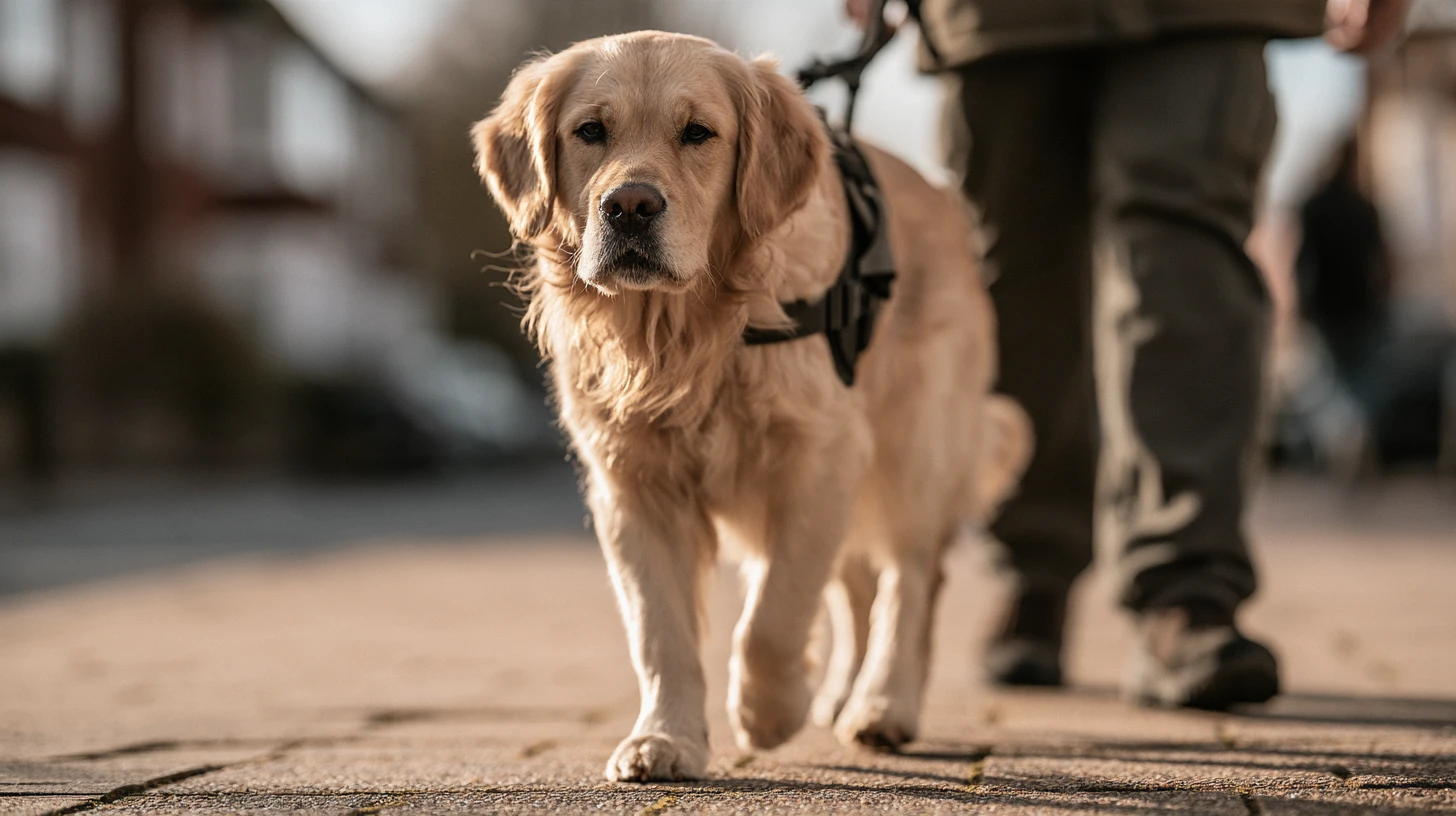
Any suitable dog can be considered, but charities set age, health and temperament criteria. Labradors, Golden Retrievers and their crosses are the most common assistance dogs, but Support Dogs says its disability assistance programme has worked with poodles, doodles, spaniels, schnauzers and even a miniature Dachshund. Size should suit the tasks: a dog that retrieves or presses buttons needs enough height and strength without being too big for your home and transport. Many well-bred dogs turn out not to suit public work, so have a plan for that possibility.
What to ask a breeder
- Which health tests have both parents had? Ask for BVA/RKC hip and elbow results, an eye certificate and breed-relevant DNA tests.
- How do the parents behave in public, around other dogs and with strangers?
- How do you socialise puppies before eight weeks?
- Will you help me choose a puppy for temperament and confidence rather than colour or markings?
- Will you take the dog back at any age if it does not suit assistance work or my circumstances?
Be wary of any breeder advertising “assistance dog puppies” or “service dog puppies”. No puppy can be guaranteed to qualify, and Support Dogs tells people not to get a dog just so the charity can train it.
Legal and welfare notes
In England, Scotland and Wales, the Equality Act 2010 protects disabled people who use assistance dogs, including owner-trained dogs that are trained to assist with their disability; in Northern Ireland the Disability Discrimination Act 1995 applies. There is no UK register for assistance dogs, so online registries, certificates and ID cards carry no legal weight, and no one can demand legal proof. ADUK members and candidates use reward-based training, and every owner has a legal duty to meet their dog’s welfare needs, under the Animal Welfare Act 2006 in England and Wales and equivalent laws in Scotland and Northern Ireland.
Frequently asked questions
Can I train my own assistance dog in the UK?
Yes. The law does not require a charity-trained dog, but support from an accredited programme makes a reliable standard far more likely.
Do I need to register my dog as an assistance dog?
No. ADUK says there is no register for assistance dogs in the UK, so it is not possible to register a dog with anyone.
How long does assistance dog training for my dog take?
It varies. Dog A.I.D. says its programme can take up to two years, and Support Dogs will not start training a dog until it is at least 18 months old.
Breeders whose dogs have gone on to work as owner-trained assistance dogs, or who breed for the sound health and steady temperament this work needs, are welcome to list your breeding on Canine Breeder. Please describe your dogs’ aptitude honestly and never promise that a puppy will qualify.
Breeds used for owner-trained assistance dogs
More in assistance dogs
- Assistance dogs
- Assistance dogs for children with disabilities in the UK
- Assistance-dog breeding programmes and puppy supply
- Autism assistance dogs in the UK: how they are trained and where they come from
- Dual-purpose assistance dogs for people with sight and hearing loss
- Guide dogs for the blind: how they are bred and the breeds behind them
- Hearing dogs for deaf people: breeds, puppies and training
- Mobility assistance dogs in the UK: charities, breeds and breeders
- PTSD assistance dogs for veterans in the UK