Breed dogs for mobility assistance dogs in the uk: charities, breeds and breeders? Advertise here
Buyers and trainers use this page to find breeders whose lines do this work. List your kennel free, tick the industries your dogs work in, and advertise litters and stud dogs from proven working lines.
No breeders are listed here yet, so the first profiles get the page to themselves.
- Free basic profile: your breeder or company name, website, social media, location, breeds and industries.
- Litters and stud dogs advertised in their own sections, never mixed with puppies for sale.
- Premium showcase for your services and prices, previous customers, awards, video, gallery and health certificates, with your phone and email shown to buyers.
- Sponsored articles about your breed or industry, written and published by our team.
- Featured placement at the top of this page, labelled as sponsored.
Is it free to advertise here?
Yes. A breeder profile and your litter and stud dog adverts are free. Premium profiles, featured placement and sponsored articles are optional paid extras; see pricing.
Do I need a licence to advertise puppies?
In England you need a dog breeding licence from your council if you breed three or more litters in 12 months or breed and sell dogs as a business, and Wales, Scotland and Northern Ireland have their own schemes. Licensed breeders show their licence number and issuing council on every advert. Puppies must be at least eight weeks old before they go to new homes.
Is my listing already here?
We add licensed breeders from councils' public registers. Search for your kennel name; if it is listed you can claim it and edit everything.
About mobility assistance dogs in the uk: charities, breeds and breeders
Mobility assistance dogs help people with physical disabilities with everyday tasks that would otherwise need another person. This page covers who trains assistance dogs for disabled people in the UK, the disability assistance dog breeds they use and where breeders fit in. These dogs are matched through charities, not sold, and the breeders listed on Canine Breeder do not supply trained assistance dogs.
What this work involves
Charities list tasks such as:
- opening and closing doors
- picking up dropped items such as keys or a phone
- helping with dressing and undressing
- loading and unloading the washing machine
- pressing control buttons
- raising the alarm in an emergency
Some partners use wheelchairs, so a wheelchair assistance dog must work calmly beside a chair in shops and on public transport. It needs a willing but gentle retrieve, a steady temperament and sound joints, because the job involves a lot of carrying and reaching.
Who trains and supplies these dogs in the UK
- Canine Partners trains assistance dogs for adults aged 18 and over with physical disabilities. It breeds many of its own puppies and also works with trusted external breeders who meet its welfare standards. Its breeding bitches live with volunteers and may have up to four litters. Puppies live with a Puppy Training Volunteer from about eight weeks old until they start assistance dog training at 12 to 16 months. Applications open in windows because demand is high.
- Dogs for Good (Banbury, Oxfordshire) trains assistance dogs for physically disabled children and adults and runs its own breeding programme.
- Support Dogs (Sheffield) trains the client’s own pet dog as a disability assistance dog.
- Dog A.I.D. (Shrewsbury) coaches physically disabled adults to train their own pet dog with a volunteer trainer, over up to two years.
All four are members of Assistance Dogs UK (ADUK), the coalition of charities accredited by Assistance Dogs International and/or the International Guide Dog Federation. The main supply model is charity-bred, and dogs are matched to applicants rather than sold. Eligibility rules and waiting lists apply.
Breeds and lines
Canine Partners works with Labradors, Golden Retrievers, doodles and crosses of these breeds. It says they are typically intelligent, food-motivated and eager to learn, with a natural retrieve and the strength for practical tasks, and that doodles can suit people with allergies. The common disability assistance dog breeds are:
- Labrador Retriever
- Golden Retriever
- Labrador x Golden Retriever
- Labrador x Poodle
Breeders of these breeds may have dogs whose temperament suits the work. Canine Partners does use some external breeders, but only those that meet its welfare standards and on the charity’s own terms.
What to ask a breeder
- Which health tests have both parents had? Ask for BVA/RKC hip and elbow results, a current eye certificate and breed-relevant DNA tests. For a Poodle cross, ask about both parents.
- Do the parents naturally pick up and carry things, and do they have soft mouths?
- Have the puppies met wheelchairs, walking aids and people who move differently?
- Have any dogs from your lines been placed with an assistance dog charity, and how do you know?
- Will you help me choose a puppy for temperament rather than looks?
- Will you take the dog back at any age?
Legal and welfare notes
In England, Scotland and Wales, the Equality Act 2010 protects disabled people who use trained assistance dogs from discrimination by shops, services and transport providers, and its taxi rules cover dogs trained by a prescribed charity to help people with mobility-related disabilities. In Northern Ireland the Disability Discrimination Act 1995 applies. There is no statutory certification scheme or government register for assistance dogs. ADUK members issue their own ID, and online “registrations” have no legal standing.
Frequently asked questions
How do I apply for a mobility assistance dog?
Contact the charity whose criteria fit you. Canine Partners, for example, takes applicants aged 18 and over who live permanently in the UK, but not people whose main reason for applying relates to epilepsy, autism, dementia or mental health.
Can I buy a trained wheelchair assistance dog?
No. The charities that train mobility assistance dogs match them with applicants and support each partnership after placement.
Can my own dog become a disability assistance dog?
Possibly. Support Dogs accepts pet dogs aged one to three that you have owned for at least six months, and it will not start training before 18 months. It tells people not to get a dog just so the charity can train it. Dog A.I.D. also works with people’s own pet dogs.
If you breed Labradors, Golden Retrievers or retriever and Poodle crosses with sound health and a steady, willing temperament, you are welcome to list your breeding on Canine Breeder. Please describe your dogs’ aptitude honestly, and only mention assistance dog placements you can evidence.
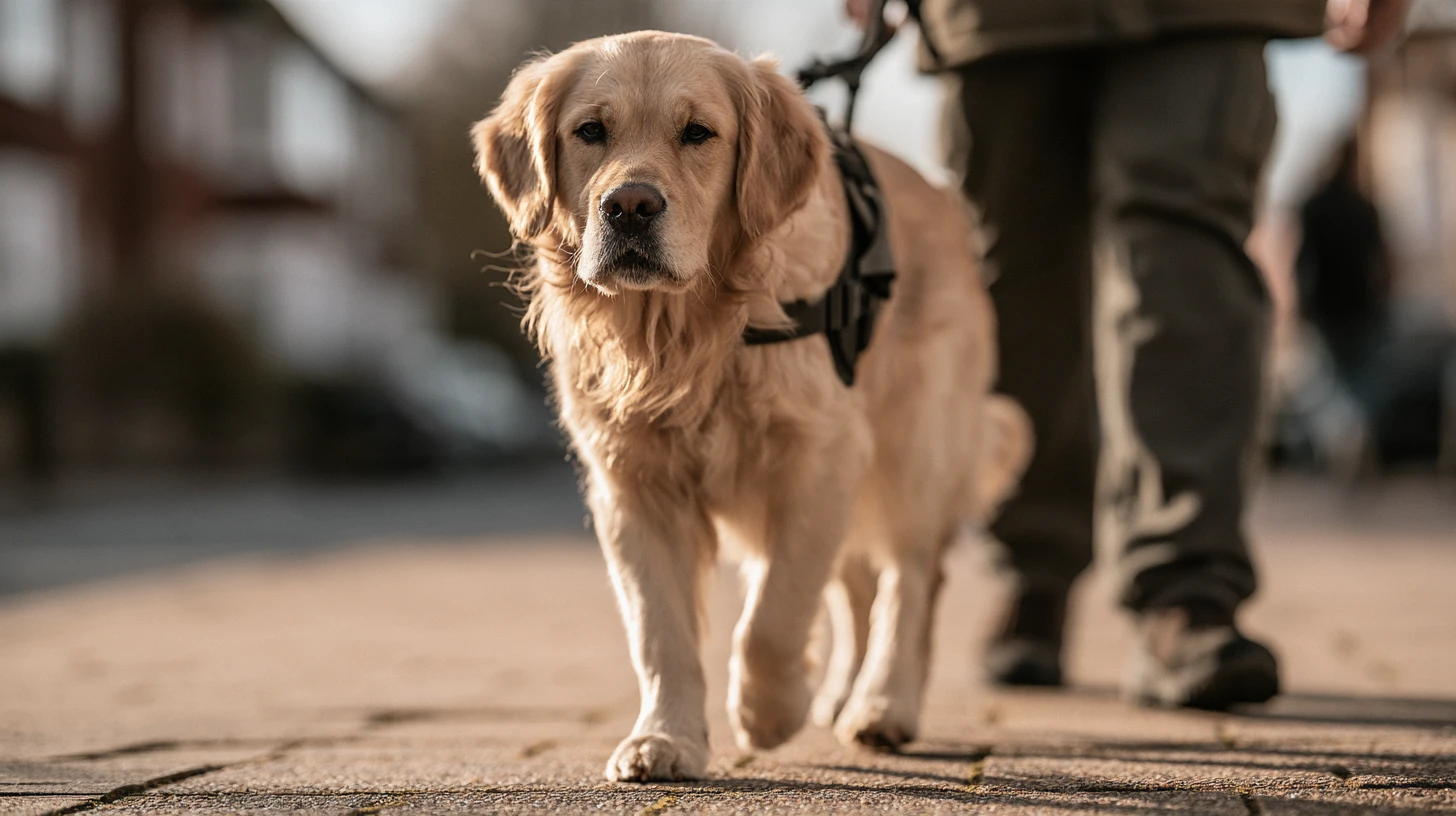
Breeds used for mobility and physical disability assistance dogs
More in assistance dogs
- Assistance dogs
- Assistance dogs for children with disabilities in the UK
- Assistance-dog breeding programmes and puppy supply
- Autism assistance dogs in the UK: how they are trained and where they come from
- Dual-purpose assistance dogs for people with sight and hearing loss
- Guide dogs for the blind: how they are bred and the breeds behind them
- Hearing dogs for deaf people: breeds, puppies and training
- Owner-trained assistance dogs in the UK
- PTSD assistance dogs for veterans in the UK