Breed dogs for wildfowling dogs? Advertise here
Buyers and trainers use this page to find breeders whose lines do this work. List your kennel free, tick the industries your dogs work in, and advertise litters and stud dogs from proven working lines.
No breeders are listed here yet, so the first profiles get the page to themselves.
- Free basic profile: your breeder or company name, website, social media, location, breeds and industries.
- Litters and stud dogs advertised in their own sections, never mixed with puppies for sale.
- Premium showcase for your services and prices, previous customers, awards, video, gallery and health certificates, with your phone and email shown to buyers.
- Sponsored articles about your breed or industry, written and published by our team.
- Featured placement at the top of this page, labelled as sponsored.
Is it free to advertise here?
Yes. A breeder profile and your litter and stud dog adverts are free. Premium profiles, featured placement and sponsored articles are optional paid extras; see pricing.
Do I need a licence to advertise puppies?
In England you need a dog breeding licence from your council if you breed three or more litters in 12 months or breed and sell dogs as a business, and Wales, Scotland and Northern Ireland have their own schemes. Licensed breeders show their licence number and issuing council on every advert. Puppies must be at least eight weeks old before they go to new homes.
Is my listing already here?
We add licensed breeders from councils' public registers. Search for your kennel name; if it is listed you can claim it and edit everything.
About wildfowling dogs
Wildfowling is the pursuit of wild duck and geese on marshes, estuaries and the foreshore, usually at dawn or dusk in the depths of winter. BASC notes that dogs are often vital to retrieve downed birds from the water, and a good wildfowling dog is as much a safety asset as a retriever. This page explains what the work demands, which retrievers suit it, and what to ask a breeder when you are looking for a labrador for wildfowling or a dog for duck shooting.
What this work involves
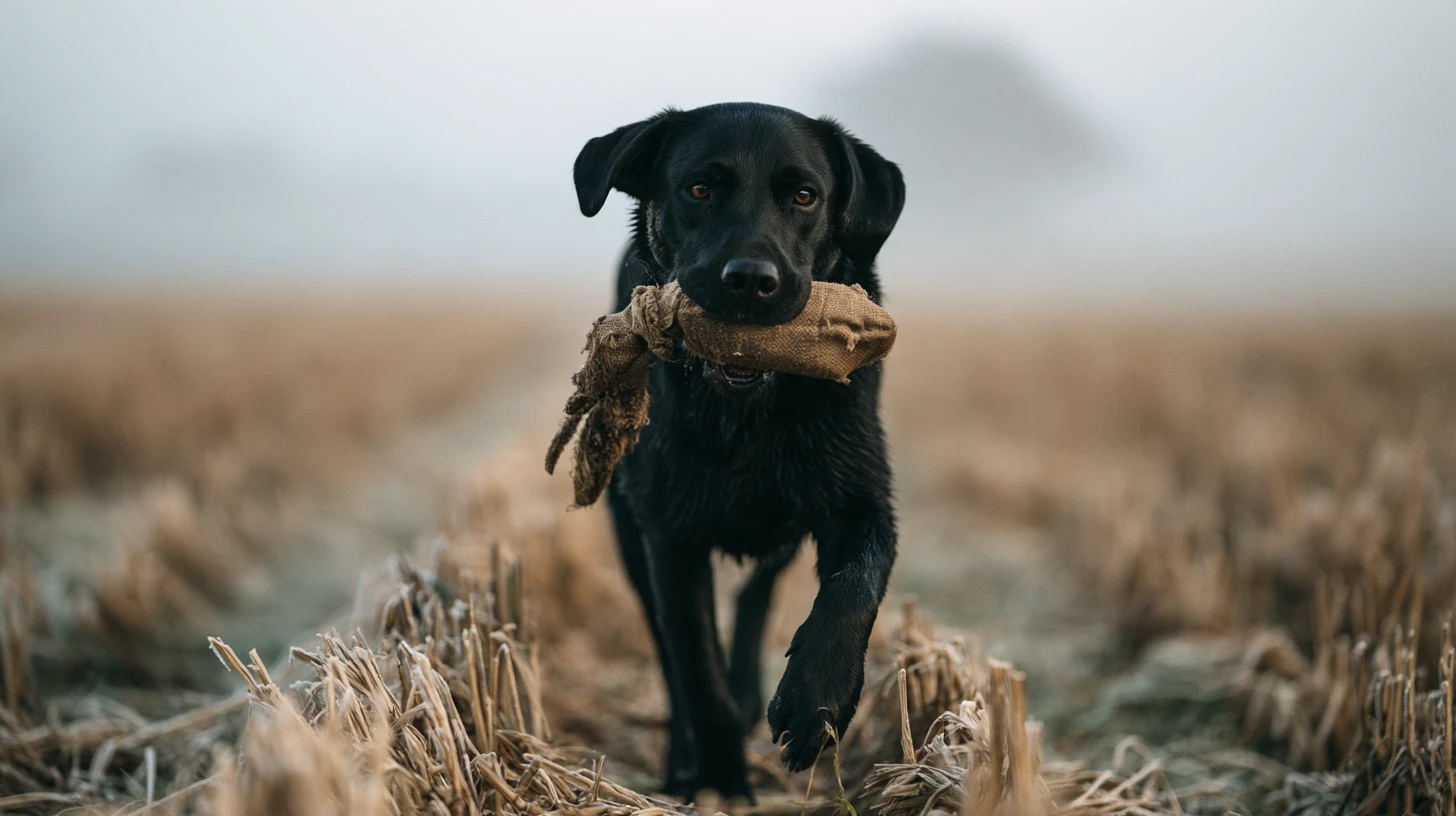
A foreshore dog waits for long spells in a creek, gutter or hide, often in wind, rain and frost, without fidgeting or whining. It must mark birds falling in poor light, sometimes out of sight over water or mud, and then swim through cold, fast-moving tidal water, tackle soft mud and weed, and carry heavy geese back to hand. It must be steady to shot and to wildfowl flighting past, and it must come back reliably, because tides and mud can be dangerous for dogs as well as people.
Physically, a wildfowling retriever needs a dense, water-resistant coat, a strong swimming build, stamina and the sense to conserve energy. Mentally, it needs patience, a good memory for marked falls and the drive to keep hunting for a wounded bird.
Who trains and supplies these dogs in the UK
The supply model is private breeders and owner training. Wildfowlers buy puppies or part-trained young dogs from working kennels and train them themselves, often after the dog has learned its trade on driven or rough shoots. No breeder on this site sells a trained or certified wildfowling dog.
BASC, the British Association for Shooting and Conservation, is the main organisation for the sport. It traces its roots to the Wildfowlers’ Association of Great Britain and Ireland (WAGBI), founded by Stanley Duncan in 1908. The Gamekeepers’ Association of the United Kingdom became part of WAGBI in 1975, and WAGBI later became BASC. It describes itself as the UK’s largest shooting organisation, with more than 150,000 members and more than 1,200 affiliated clubs and registered shooting syndicates. BASC gives members advice on the law and biosecurity, and runs a wildfowling permit scheme for members on some sites. Joining a local wildfowling club is a common way into the sport and can give access to foreshore where the club holds shooting rights, along with experienced members who can advise on dogs and safety.
Breeds and lines
The Labrador Retriever is the most common wildfowling dog: water-loving, tough, biddable and well suited to cold conditions. The Chesapeake Bay Retriever, developed in the United States for retrieving duck from icy water, is powerful and weatherproof but more independent and protective, so it suits experienced owners. The Golden Retriever and the Flat Coated Retriever from working lines can also do the job, though their coats hold more mud and ice.
Look for proven working parents and health testing appropriate to the breed, including BVA/KC hip and elbow scores, eye certificates and the recommended DNA tests.
What to ask a breeder
- Do the parents work on the foreshore or at duck flights, and can I see them retrieve from water?
- How do the parents cope with long waits in cold and wet conditions?
- Are they steady to shot and to birds flighting close by?
- What are the hip and elbow scores, and which eye and DNA tests have been done?
- How dense are the parents’ coats, and how do they cope with mud and ice?
- Do the parents have the drive to keep hunting for a wounded bird?
Legal and welfare notes
Under the Wildlife and Countryside Act 1981, only listed quarry species of wild duck and geese may be shot, and only in season. The open season is 1 September to 31 January inland, extending to 20 February in or over areas below the high-water mark of ordinary spring tides. In England, lead shot may not be used with a shotgun below that high-water mark, over certain listed sites of special scientific interest, or to shoot ducks, geese and certain other wetland birds; Wales has similar rules, and Scotland’s apply over all wetlands. A wider Great Britain restriction on lead ammunition under UK REACH became law on 1 April 2026, with transition periods of up to three years, so check the current rules before buying cartridges. Foreshore shooting needs club membership, a permit or the landowner’s permission, so never assume a public right to shoot. Keep your dog’s welfare in mind: cold-water retrieves are exhausting, so dry and warm the dog between flights and never send it into water or mud you would not judge safe.
Frequently asked questions
What is the best dog for wildfowling?
A working-bred Labrador suits most wildfowlers. The Chesapeake Bay Retriever is a specialist alternative for experienced handlers.
How old should a dog be before it goes wildfowling?
Most handlers wait until a dog is steady, experienced on land and a confident swimmer, often in its second or third season, and start on calm, sheltered water.
Can a spaniel do wildfowling?
Spaniels can retrieve duck on inland ponds, but big tides, heavy geese and long cold waits favour a larger retriever.
If your retrievers come from working lines whose dogs work on the foreshore or at duck flights, list your kennel on caninebreeder.co.uk so wildfowlers can find you.
Breeds used for wildfowling dogs
More in working gundogs
- Working gundogs
- Beating dogs and beaters’ spaniels
- Deer stalking and deer tracking dogs
- Falconry and hawking dogs
- Field trial hunt, point and retrieve breeds
- Field trial pointers and setters
- Field trial retrievers
- Field trial spaniels
- Peg dogs for standing guns
- Picking-up dogs for driven shoots
- Professional gundog trainers and residential training
- Rough shooting and walked-up dogs
- Working-bred gundog puppies and field trial lines