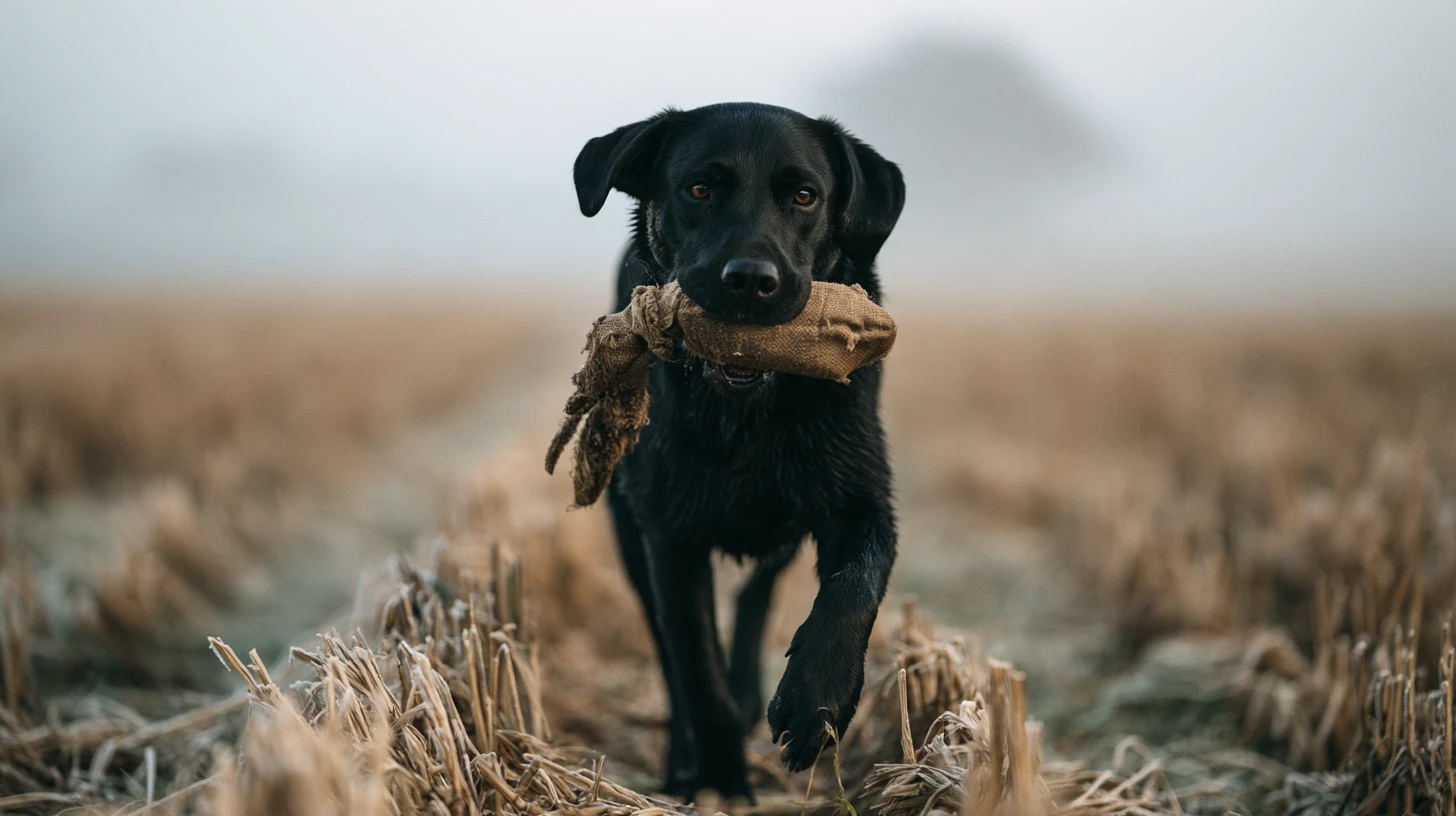
Breeders whose dogs work in working gundogs
- Westhouse Retrievers LtdNorth Yorkshire, Yorkshire and The Humber
- Westmorland Gundogs LtdWestmorland and Furness, North West
- Wicketwood Gundogs LimitedGedling, Nottinghamshire
- Verstone Gundogs LimitedWestmorland and Furness, North West
- Tundra Retrievers LtdGlasgow City
- The Gundog Ltd.Calderdale, Yorkshire and The Humber
- Spaniel Companions LtdTest Valley, Hampshire
- Terracehills Gundogs LimitedLichfield, Staffordshire
- Singleton Spaniels LtdFylde, Lancashire
- Sintonsand Gundogs LimitedHerefordshire, West Midlands
- Ribble Valley Gun Dogs LtdRibble Valley, Lancashire
- Poolgreen Gundogs LtdShropshire, West Midlands
58 listed. See all
About working gundogs
Gundogs are bred to find, flush, point and retrieve game for the gun. In Britain that work is organised, regulated and judged more thoroughly than any other canine discipline: the Royal Kennel Club (RKC) licenses field trials and gundog working tests, panels of judges award titles, and breed clubs and gundog societies run training days from spring to autumn. A breeder’s claims here can be checked, and a buyer should check them.
What this discipline is
The RKC groups gundog breeds by function. Retrievers (Labrador, Golden, Flat Coated, Curly Coated, Chesapeake Bay and Nova Scotia Duck Tolling) mark and retrieve shot game. Spaniels (English Springer, Cocker, Welsh Springer, Clumber and others) hunt cover and flush game within gunshot, then retrieve. Pointers and setters (Pointer, English, Irish, Gordon and Irish Red and White Setters) quarter open ground and point birds. The Hunt, Point, Retrieve (HPR) breeds (German Shorthaired and Wirehaired Pointers, Hungarian Vizsla, Weimaraner, Brittany, Large Munsterlander and others) do all three.
Field trials are competitions held on shoot days under the RKC’s Field Trial Regulations (the “J Regulations”), judged on live shot game. Gundog working tests (GWTs) use dummies and are run out of season as training and grading events. Both feed into a set of titles that describe a dog’s proven ability.
Who trains or supplies these dogs in the UK
Nobody supplies finished gundogs on a large scale. Dogs are trained by their owners, by professional gundog trainers who take dogs in for weeks or months, and through breed club and gundog society training classes. Most field trial competitors buy a puppy from a field trial or working line and bring it on themselves.
The titles worth understanding:
- Field Trial Champion (FTCh): the top working title. For spaniels it requires two first prizes in open stakes under two different A Panel judges; for pointers and setters, a win in an open stake or two firsts at different stakes under different A Panel judges with at least 16 runners; retrievers must also hold a water and drive certificate. The detail sits in the J Regulations.
- Field Trial Winner (FTW) and Certificate of Merit (COM): awards short of the championship that still show a dog has been placed or commended under trial conditions.
- Show Champion (Sh CH) and Champion (CH): a gundog with three Challenge Certificates is a Show Champion only. To become a full Champion it needs a field trial award, a Diploma of Merit or the Show Gundog Working Certificate (SGWC), an assessment of natural working ability signed by two field trial panel judges, one of them A Panel, in which retrieving breeds are expected to have experience of freshly shot game and a noisy dog fails.
- Dual Champion: both CH and FTCh, now rare.
- The RKC also offers a Working Gundog Certificate, an assessment on a shoot day for dogs that do not compete.
Breeds and lines
“Working line” and “show line” have diverged in most gundog breeds over decades. Working Cockers and Springers are smaller, lighter-coated and higher-drive than their show cousins; working Labradors are leaner and faster. Both kinds are registered with the RKC; the difference is in what the parents were selected for. A pedigree full of FTCh and FTW prefixes tells you the line has been tested in competition. A pedigree of show champions tells you something different, unless those dogs also carry SGWC or field awards.
Health matters as much as ability. Hip and elbow scores, annual eye tests and the breed DNA tests listed in the RKC Health Standard (for example the exercise-induced collapse and progressive retinal atrophy tests in Labradors, and the range of tests in Cockers) should be available for both parents.
What a buyer should ask a breeder
- What field trial or working test awards do the sire, dam and grandparents hold, and can I see them in the RKC records or the trial results?
- Do you shoot over or compete with your dogs, and can I see them work?
- What health results do both parents have?
- What temperament is this line known for: hard-going, soft, steady, noisy?
- Are you licensed by your council if your breeding requires it?
A breeder selling “trained gundogs” as puppies is selling potential, not training. Part-trained and fully trained adult dogs are sold in this discipline, usually by trainers, and should be seen working on the ground before any money changes hands.
What breeders can list here
Breeders may list their breed and group, the working titles and awards in their lines, their health results and whether they offer training. They may not describe puppies as trained or certified gundogs, and Canine Breeder does not supply or vet gundogs. This site is independent of the RKC, the gundog societies and the breed clubs.
If you breed or trial working gundogs of any group, list your kennel under working gundogs so that shooting people and triallers can find you.
Breeds used for working gundogs
- English Springer Spaniel breeders
- Cocker Spaniel breeders
- Labrador Retriever breeders
- Bavarian Mountain Hound breeders
- German Wirehaired Pointer breeders
- Hungarian Wirehaired Vizsla breeders
- Pointer breeders
- English Setter breeders
- Brittany breeders
- German Shorthaired Pointer breeders
- Hungarian Vizsla breeders
- Weimaraner breeders
- Large Munsterlander breeders
- Italian Spinone breeders
- Irish Setter breeders
- Gordon Setter breeders
Specialisations in working gundogs
- Beating dogs and beaters’ spaniels
- Deer stalking and deer tracking dogs
- Falconry and hawking dogs
- Field trial hunt, point and retrieve breeds
- Field trial pointers and setters
- Field trial retrievers
- Field trial spaniels
- Peg dogs for standing guns
- Picking-up dogs for driven shoots
- Professional gundog trainers and residential training
- Rough shooting and walked-up dogs
- Wildfowling dogs
- Working-bred gundog puppies and field trial lines