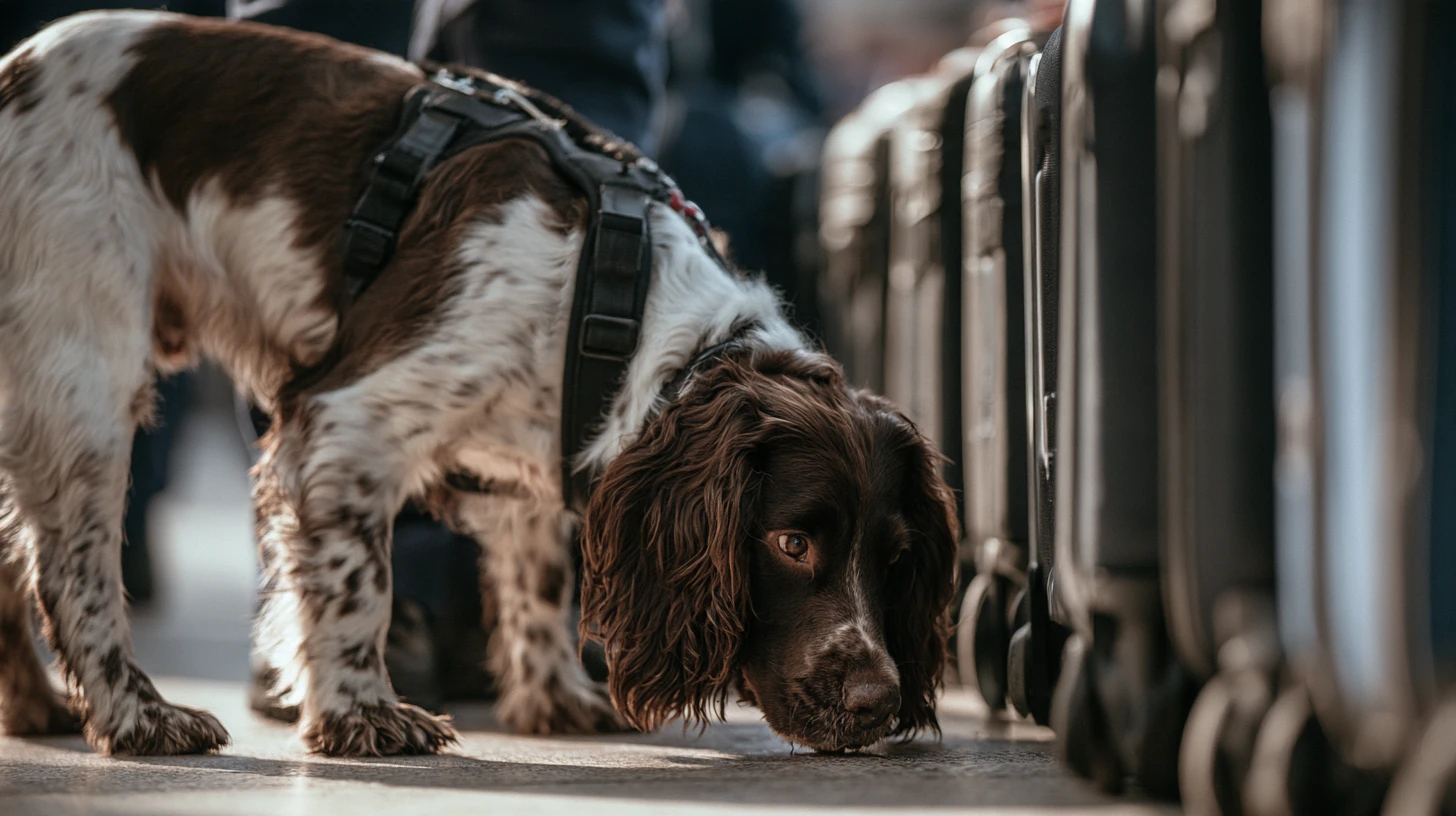
Breed dogs for cash and currency detection dogs? Advertise here
Buyers and trainers use this page to find breeders whose lines do this work. List your kennel free, tick the industries your dogs work in, and advertise litters and stud dogs from proven working lines.
No breeders are listed here yet, so the first profiles get the page to themselves.
- Free basic profile: your breeder or company name, website, social media, location, breeds and industries.
- Litters and stud dogs advertised in their own sections, never mixed with puppies for sale.
- Premium showcase for your services and prices, previous customers, awards, video, gallery and health certificates, with your phone and email shown to buyers.
- Sponsored articles about your breed or industry, written and published by our team.
- Featured placement at the top of this page, labelled as sponsored.
Is it free to advertise here?
Yes. A breeder profile and your litter and stud dog adverts are free. Premium profiles, featured placement and sponsored articles are optional paid extras; see pricing.
Do I need a licence to advertise puppies?
In England you need a dog breeding licence from your council if you breed three or more litters in 12 months or breed and sell dogs as a business, and Wales, Scotland and Northern Ireland have their own schemes. Licensed breeders show their licence number and issuing council on every advert. Puppies must be at least eight weeks old before they go to new homes.
Is my listing already here?
We add licensed breeders from councils' public registers. Search for your kennel name; if it is listed you can claim it and edit everything.
About cash and currency detection dogs
A cash detection dog is trained to find the scent of banknotes hidden in luggage, vehicles, freight, post and property. In the UK, money sniffer dogs work at the border and in criminal investigations. They help officers find cash linked to drug supply, money laundering and smuggling. Breeders on this directory supply puppies and young dogs with the aptitude for this work, not trained or certified detection dogs.
What this work involves
A currency detection dog UK agencies deploy is trained to recognise the odour of banknotes in the currencies it is likely to meet. Border Force lists sterling, euros and dollars. The dog searches bags, parcels, vehicles and rooms and indicates at the source. Officers can then search and, where the law allows, seize the cash.
Cash is often packed deep inside vehicles, vacuum-sealed or hidden among other goods. The dog needs persistence, a strong hunting drive and the focus to work in busy terminals and crowded arrivals halls. Many cash dogs are multi-skilled and are also trained on drugs, tobacco or firearms. The reward is usually a game with a ball or tug toy.
Who trains and supplies these dogs in the UK
Border Force runs a national detector dog programme within the Home Office. Its 2013 guide to the programme describes multi-skilled dogs trained to find cash in sterling, euros and dollars. The same dogs search for drugs, tobacco, products of animal origin, firearms and people at seaports, airports, international rail stations and postal depots. Dogs come through a network of contacts, dogs given by the public and animal welfare establishments such as Battersea Dogs Home. They are usually selected at 12 to 24 months and then trained by Border Force’s own instructors or on a police dog training course.
Police forces train specialist search dogs, often spaniels and Labradors, to find drugs, cash and firearms. Official police guidance lists cash, drugs and firearms detection dogs among police dog roles. The dogs work during warrants and searches of people, property and vehicles. Police dogs are generally obtained from private kennels, and forces also consider dogs offered by the public, including some rescues. Forces train them with their own instructors.
Wagtail UK provides tobacco and cash detection dog teams only to government agencies. The company states that its dogs found £4.5 million in cash over a five-year period, along with large seizures of illegal cigarettes and hand-rolling tobacco. Wagtail says dogs for its work should ideally be of a working breed, with high drive and enthusiasm, and aged between 11 months and three years. It trains its dogs itself.
In each case the agency or company selects and trains the dog. The breeder’s part is to produce healthy, confident dogs with the right drive.
Breeds and lines
Border Force names the English Springer Spaniel, the Cocker Spaniel, the Labrador Retriever and the Beagle as its most common detection breeds, and police cash dogs are often spaniels or Labradors. Working (field-bred) lines are often preferred because they are bred for hunting and retrieving. Dogs need sound joints for climbing in and out of vehicles and freight, and confidence on unfamiliar surfaces. They also need a sociable nature, because cash dogs often work close to the travelling public.
What to ask a breeder
- Are both parents from working lines, and have any dogs you bred been selected for police, Border Force or commercial detection work?
- Which health tests have the parents had, such as hip and elbow scores, eye certificates and breed-relevant DNA tests, and can I see the results?
- How do you rear puppies to be confident with noise, crowds, vehicles and different floor surfaces?
- How do you judge toy drive and retrieve in a litter, and will you help match a puppy to a working home?
- What happens if the dog is not selected for detection work?
Legal and welfare notes
Cash seizure powers come from the Proceeds of Crime Act 2002. Part 5, Chapter 3 allows authorised officers to search for, seize and detain cash suspected of being the proceeds of crime or meant for use in unlawful conduct. It also lets them apply for the cash to be forfeited. Separately, anyone carrying cash of £10,000 or more between Great Britain and a country outside the UK must declare it, and different rules apply in Northern Ireland. Border Force can seize undeclared cash, and a penalty of up to £5,000 may be charged to get it back. A dog’s indication helps officers find cash, but it is the officers who decide whether legal powers apply. Working dogs are protected by the Animal Welfare Act 2006 in England and Wales and by equivalent laws elsewhere in the UK.
Frequently asked questions
Can a money sniffer dog tell whether cash is criminal?
No. The dog is trained to find the odour of banknotes. Whether cash is suspected of being criminal is a matter for officers, who must have reasonable grounds for suspicion under the Proceeds of Crime Act 2002 before seizing it.
Do breeders sell trained cash detection dogs?
No. Border Force, police forces and specialist companies select young dogs and train them. A breeder can supply a puppy from working lines and tell you whether relatives have gone on to detection work.
Which breeds are used as cash detection dogs in the UK?
Mainly English Springer Spaniels, Labradors and Cocker Spaniels, often from working lines. Border Force also names Beagles among its most common detection breeds.
If you breed working spaniels or Labradors and dogs from your lines work in cash and currency detection, you are welcome to join the directory. Add your listing and describe your lines, your health testing and how you match puppies to homes.
Breeds used for cash and currency detection dogs
More in detection dogs
- Detection dogs
- Bed bug detection dogs
- Conservation and wildlife detection dogs
- Detection dog puppies, trainers and handler courses
- Digital storage device detection dogs
- Drugs and narcotics detection dogs
- Dry rot and building-decay detection dogs
- Explosives detection dogs
- Fire investigation and accelerant detection dogs
- Firearms and weapons detection dogs
- Food, animal-product and wildlife-trade detection dogs
- Invasive species and Japanese knotweed detection dogs
- Tobacco and illicit cigarette detection dogs
- Truffle hunting dogs