Breed dogs for digital storage device detection dogs? Advertise here
Buyers and trainers use this page to find breeders whose lines do this work. List your kennel free, tick the industries your dogs work in, and advertise litters and stud dogs from proven working lines.
No breeders are listed here yet, so the first profiles get the page to themselves.
- Free basic profile: your breeder or company name, website, social media, location, breeds and industries.
- Litters and stud dogs advertised in their own sections, never mixed with puppies for sale.
- Premium showcase for your services and prices, previous customers, awards, video, gallery and health certificates, with your phone and email shown to buyers.
- Sponsored articles about your breed or industry, written and published by our team.
- Featured placement at the top of this page, labelled as sponsored.
Is it free to advertise here?
Yes. A breeder profile and your litter and stud dog adverts are free. Premium profiles, featured placement and sponsored articles are optional paid extras; see pricing.
Do I need a licence to advertise puppies?
In England you need a dog breeding licence from your council if you breed three or more litters in 12 months or breed and sell dogs as a business, and Wales, Scotland and Northern Ireland have their own schemes. Licensed breeders show their licence number and issuing council on every advert. Puppies must be at least eight weeks old before they go to new homes.
Is my listing already here?
We add licensed breeders from councils' public registers. Search for your kennel name; if it is listed you can claim it and edit everything.
About digital storage device detection dogs
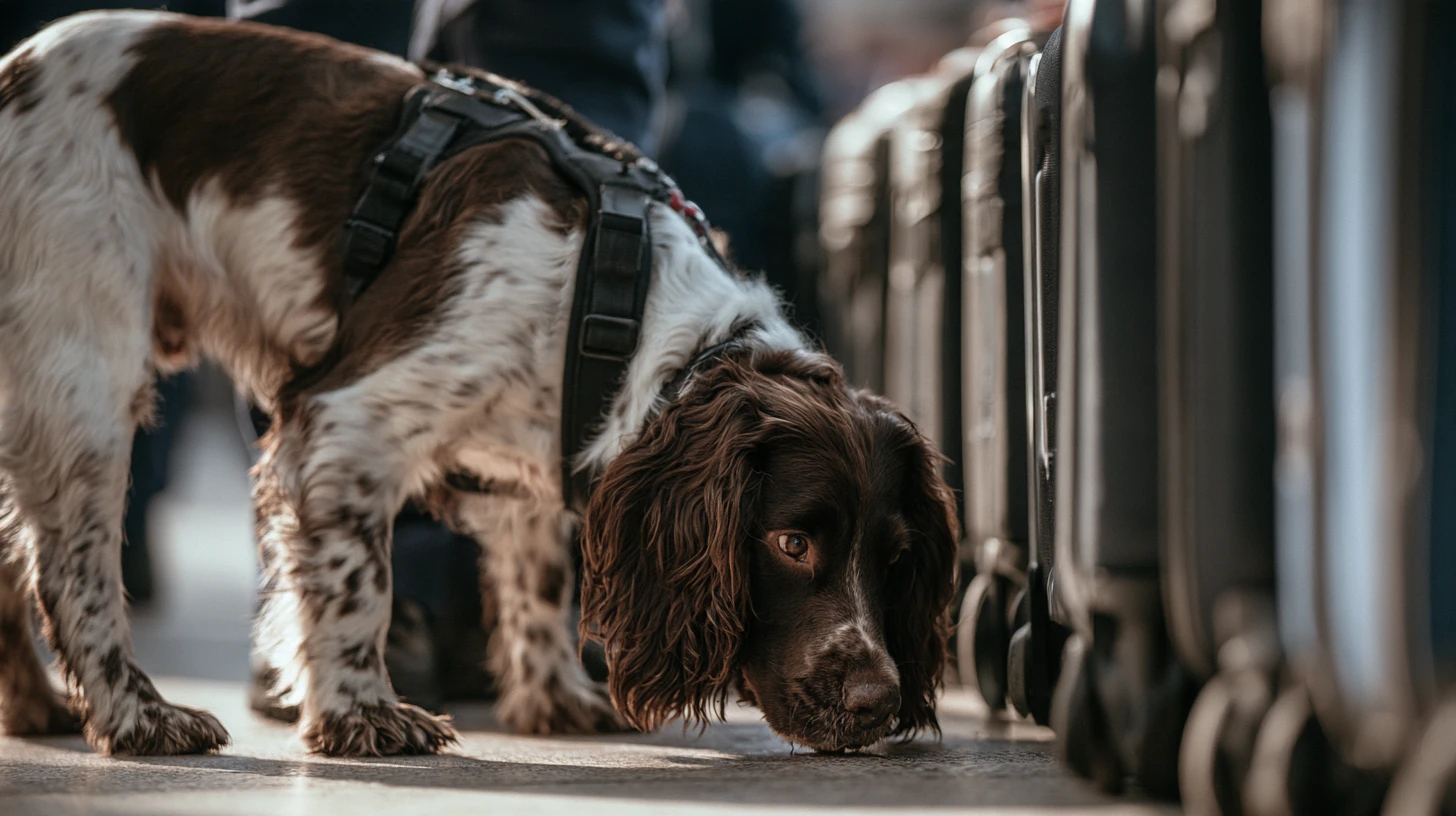
A digital detection dog searches for hidden memory sticks, SD cards, hard drives, SIM cards and phones. When a police dog finds a memory card disguised as a toy brick, it is one of these specialists. In the UK they belong to police forces and the prison service, which breed or buy young dogs and train them in-house. Breeders on this site can offer the spaniel and Labrador lines these agencies select from, but nobody here sells a trained or certified digital detection dog.
What this work involves
Storage devices are small and easy to hide, so a visual search can miss them. West Midlands Police explains that each device has its own smell and that devices also share a common smell, which a trained dog can pick up. The dog learns to give a clear, controlled indication so that officers can recover the item without damaging it, and training continues throughout its career as new gadgets come onto the market.
West Midlands Police says its digital dogs search premises, vehicles and open ground where evidence has been dropped or discarded. They have found a phone that a suspect hiding in a loft denied having, and the force says they can find items such as a memory card disguised as a piece of Lego. It has also used them for voluntary searches of victims’ homes and cars in stalking and harassment cases, to check that no device has been planted.
In prisons, the phone detection dog is the prison service’s answer to handsets and SIM cards. The HM Prison and Probation Service (HMPPS) Prison Dogs Policy Framework, which applies in England and Wales, says illicit phones let prisoners stay in touch with criminal networks and contact victims. Mobile phone detection is among its dog specialisms, and every team is relicensed at least once a year by its National Dog Inspectorate.
Who trains and supplies these dogs in the UK
- West Midlands Police has a team of digital detection dogs it calls its “Digi Crew”. Its first, Chip, a Sprocker, was trained and first licensed around 2020, and two Cocker Spaniels, Oreo and Barney, were licensed in 2024. The dogs search for mobile phones, SIM cards and memory sticks, and the force also breeds police puppies through its own development programme.
- HM Prison and Probation Service runs its dog operation through the National Dog and Technical Support Group, based at Hatfield and Kidlington. Its policy says dogs must be bought from suppliers through authorised procurement methods, any dog costing more than £3,000 must be sanctioned by the local budget holder, and dogs must not knowingly be bought from breeders who run unethical breeding programmes or operate outside the Animal Welfare Act 2006. Spaniels, Labradors, retrievers and other gundog breeds may be procured for search duties.
The model is agency-led: forces and the prison service breed or buy suitable young dogs, assess them, and train and license them with their own handlers.
Breeds and lines
Spaniels (English Springers, Cockers and Sprockers) and Labrador Retrievers dominate. West Midlands Police’s digital dogs are a Sprocker and two Cocker Spaniels. Searching rooms, cars and cells for an object the size of a thumbnail needs a dog that hunts methodically for long periods, stays calm inside homes, and indicates precisely rather than scratching or grabbing. A compact size helps in cupboards and vehicles.
What to ask a breeder
- Have dogs from your lines been bought by a police force, the prison service or another agency, and at what age?
- What hip, elbow, eye and DNA test results do the parents have?
- How do the parents search for a toy hidden out of sight, and how long do they keep going?
- How are the puppies socialised to houses, stairs, vehicles and busy places?
- Can you show your council licence, if you need one, and your breeding records? HMPPS will not knowingly buy from unethical breeders.
- If a dog you sell fails assessment, will you take it back or help rehome it?
Frequently asked questions
Can dogs really smell USB sticks and SIM cards?
Yes. West Midlands Police says each device has its own smell and devices share a common one, and its dogs have found phones, SIM cards and memory cards in searches of homes, vehicles and open ground. The dog is one part of a search, alongside officers and forensic examination of anything found.
Where do the prison service’s phone detection dogs come from?
HMPPS buys dogs from suppliers under its procurement rules, including gundog breeds for search work, then trains and licenses each dog and handler team itself. It also records, at the point of purchase, what happens if a dog fails training, such as return to the previous owner or breeder, or rehoming.
Can I buy a trained digital detection dog?
No. These dogs are trained and licensed for police and prison work. What breeders can offer is a puppy or young dog from lines with the aptitude that agencies look for.
If your dogs come from lines used for digital, drug or other search work, list your breeding on Canine Breeder so agencies, trainers and buyers can find you.
Breeds used for digital storage device detection dogs
More in detection dogs
- Detection dogs
- Bed bug detection dogs
- Cash and currency detection dogs
- Conservation and wildlife detection dogs
- Detection dog puppies, trainers and handler courses
- Drugs and narcotics detection dogs
- Dry rot and building-decay detection dogs
- Explosives detection dogs
- Fire investigation and accelerant detection dogs
- Firearms and weapons detection dogs
- Food, animal-product and wildlife-trade detection dogs
- Invasive species and Japanese knotweed detection dogs
- Tobacco and illicit cigarette detection dogs
- Truffle hunting dogs