Breed dogs for invasive species and japanese knotweed detection dogs? Advertise here
Buyers and trainers use this page to find breeders whose lines do this work. List your kennel free, tick the industries your dogs work in, and advertise litters and stud dogs from proven working lines.
No breeders are listed here yet, so the first profiles get the page to themselves.
- Free basic profile: your breeder or company name, website, social media, location, breeds and industries.
- Litters and stud dogs advertised in their own sections, never mixed with puppies for sale.
- Premium showcase for your services and prices, previous customers, awards, video, gallery and health certificates, with your phone and email shown to buyers.
- Sponsored articles about your breed or industry, written and published by our team.
- Featured placement at the top of this page, labelled as sponsored.
Is it free to advertise here?
Yes. A breeder profile and your litter and stud dog adverts are free. Premium profiles, featured placement and sponsored articles are optional paid extras; see pricing.
Do I need a licence to advertise puppies?
In England you need a dog breeding licence from your council if you breed three or more litters in 12 months or breed and sell dogs as a business, and Wales, Scotland and Northern Ireland have their own schemes. Licensed breeders show their licence number and issuing council on every advert. Puppies must be at least eight weeks old before they go to new homes.
Is my listing already here?
We add licensed breeders from councils' public registers. Search for your kennel name; if it is listed you can claim it and edit everything.
About invasive species and japanese knotweed detection dogs
A Japanese knotweed sniffer dog is trained to find the scent of knotweed rhizome. This is the underground stem the plant regrows from, and it can be there even when little or nothing shows above ground. In the UK, knotweed detection dogs are used to check homes, gardens and development sites, including for buyers and sellers. Breeders on this directory supply puppies and young dogs with the aptitude for scent work. They do not supply trained or certified detection dogs.
What this work involves
Knotweed may die back in winter, or be cut back or cleared, while the rhizome stays alive underground. A knotweed detection dog searches gardens, boundaries and building land. It gives a trained indication where the rhizome scent is strongest, so a surveyor can investigate and map the area.
Environet says its Labradors Mick and Mack freeze when they detect the knotweed scent, and that its dogs can cover a large area in a matter of minutes. The dogs treat the work as a game of hide and seek, and the reward is a tennis ball.
The same idea, training a dog on a single target odour, is also used against invasive animals. Some conservation detection consultancies use dogs to help keep invasive rodents away from sensitive sites.
Who trains and supplies these dogs in the UK
Environet UK is a Japanese knotweed specialist. In May 2020 it introduced Mick and Mack, a pair of one-year-old fox red Labrador Retrievers that it describes as the UK’s first sniffer dogs trained to detect the scent of knotweed rhizome. Buddy, a black Cocker Spaniel taken in by the rescue charity Spaniel Aid, joined in July 2020 as its third knotweed detection dog. Environet’s partner RFA Security trained the dogs.
Conservation K9 Consultancy offers biosecurity detection, using dogs to check vessels, stores and cargo bound for rodent-free islands and other sensitive conservation sites.
The supply model is commercial. A survey or clean-up company works with a specialist detection dog trainer. The trainer chooses suitable young dogs, including rescues, and trains them on a target odour. Breeders supply young dogs with the right drive, and the training is done by the operator.
Breeds and lines
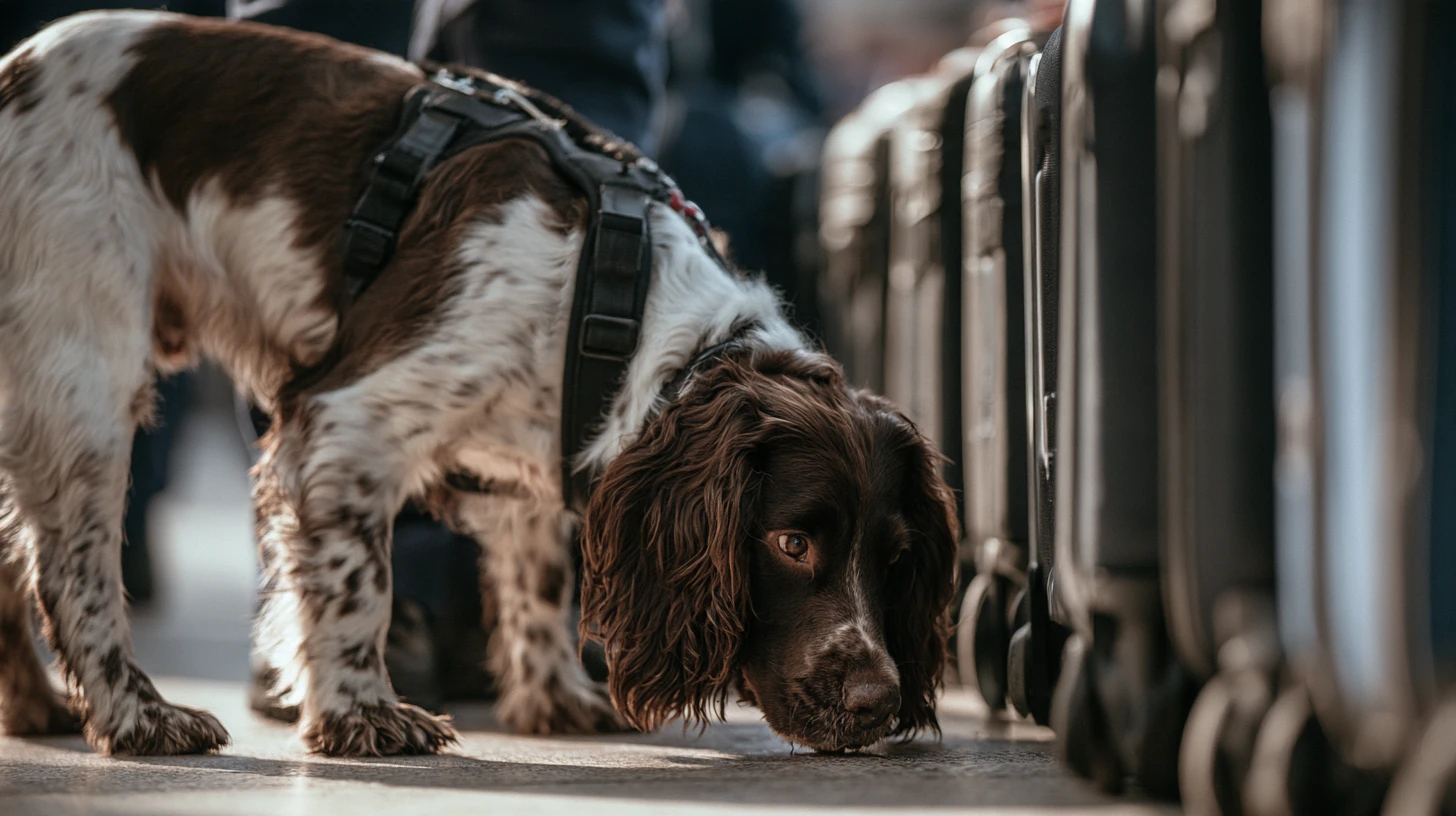
The dogs known to do knotweed work in the UK are Labrador Retrievers and a Cocker Spaniel, and other working gundogs such as the English Springer Spaniel have similar drive. Working lines usually bring the drive to search outdoors for long periods in all weathers. Dogs need sound joints for rough ground and a strong interest in a toy reward. They also need a steady temperament around people, traffic and other dogs on housing streets and building sites.
What to ask a breeder
- Are the parents from working lines, and do they show a lasting drive for a ball or toy?
- Have any dogs you bred gone on to scent detection, search or other working roles?
- What health tests have the parents had, including hip and elbow scores, eye certificates and DNA tests?
- How do you get puppies used to gardens, building sites, traffic and strangers?
- Will you take a dog back if it is not suited to working life?
Legal and welfare notes
In England and Wales, section 14 of the Wildlife and Countryside Act 1981 makes it an offence to plant, or otherwise cause to grow in the wild, any plant listed in Part II of Schedule 9. Japanese knotweed is on that list. In Scotland the offence covers causing any plant to grow in the wild outside its native range. Government guidance says you do not legally have to remove Japanese knotweed from your land unless it is causing a nuisance. However, you must stop it spreading off your property, and you can be prosecuted for causing it to spread into the wild. Soil or plant material containing knotweed may also count as controlled waste. A dog’s indication is a reason to investigate, not proof on its own.
Frequently asked questions
Can a knotweed detection dog find buried rhizome?
That is what the dogs are trained for. Environet’s dogs were trained on the scent of knotweed rhizome so they can find the plant when little shows above ground. A surveyor then investigates each positive indication.
Who introduced knotweed sniffer dogs in the UK?
Environet UK. In 2020 it introduced Mick and Mack, which it describes as the UK’s first sniffer dogs trained to detect knotweed rhizome.
Can I buy a trained invasive species detection dog in the UK?
Not from breeders on this directory. They supply puppies and young dogs. Specialist trainers working with survey and clean-up firms do the detection training.
If dogs from your breeding work in invasive species or Japanese knotweed detection, we would be glad to list you. Add your kennel and tell buyers plainly about your working lines, your health testing and how you place puppies.
Breeds used for invasive species and japanese knotweed detection dogs
More in detection dogs
- Detection dogs
- Bed bug detection dogs
- Cash and currency detection dogs
- Conservation and wildlife detection dogs
- Detection dog puppies, trainers and handler courses
- Digital storage device detection dogs
- Drugs and narcotics detection dogs
- Dry rot and building-decay detection dogs
- Explosives detection dogs
- Fire investigation and accelerant detection dogs
- Firearms and weapons detection dogs
- Food, animal-product and wildlife-trade detection dogs
- Tobacco and illicit cigarette detection dogs
- Truffle hunting dogs