Breed dogs for fire investigation and accelerant detection dogs? Advertise here
Buyers and trainers use this page to find breeders whose lines do this work. List your kennel free, tick the industries your dogs work in, and advertise litters and stud dogs from proven working lines.
No breeders are listed here yet, so the first profiles get the page to themselves.
- Free basic profile: your breeder or company name, website, social media, location, breeds and industries.
- Litters and stud dogs advertised in their own sections, never mixed with puppies for sale.
- Premium showcase for your services and prices, previous customers, awards, video, gallery and health certificates, with your phone and email shown to buyers.
- Sponsored articles about your breed or industry, written and published by our team.
- Featured placement at the top of this page, labelled as sponsored.
Is it free to advertise here?
Yes. A breeder profile and your litter and stud dog adverts are free. Premium profiles, featured placement and sponsored articles are optional paid extras; see pricing.
Do I need a licence to advertise puppies?
In England you need a dog breeding licence from your council if you breed three or more litters in 12 months or breed and sell dogs as a business, and Wales, Scotland and Northern Ireland have their own schemes. Licensed breeders show their licence number and issuing council on every advert. Puppies must be at least eight weeks old before they go to new homes.
Is my listing already here?
We add licensed breeders from councils' public registers. Search for your kennel name; if it is listed you can claim it and edit everything.
About fire investigation and accelerant detection dogs
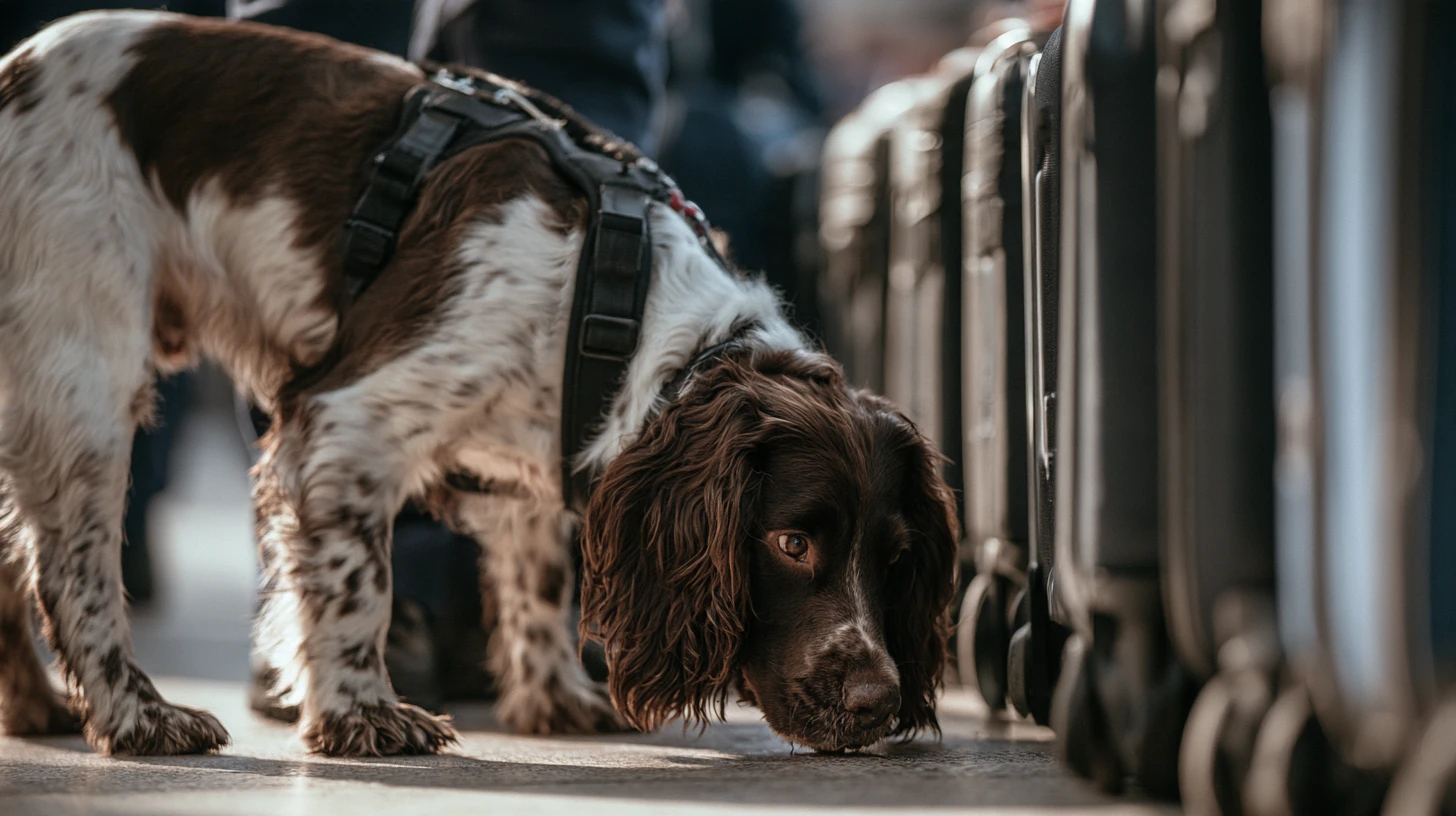
A fire investigation dog, also called an accelerant detection dog or arson dog, helps investigators work out whether a fire was started deliberately. The UK has only a small number of these dogs, and they are sourced, trained and handled by fire and rescue services, their trainers and a few specialist providers. Breeders can supply the working gundog lines, mostly spaniels, that many of the dogs come from, but no breeder on this site sells a trained or certified fire investigation dog.
What this work involves
Once a fire is out and the scene is safe, the dog searches the debris for traces of ignitable liquids such as petrol, paraffin, acetone and lighter fluid. When it indicates, the investigator takes a sample for laboratory analysis. The dog speeds up the search and guides where evidence is collected; it does not replace forensic testing.
London Fire Brigade says its long-serving dog Sherlock was trained to identify up to ten ignitable liquids, from acetone to petrol, whether neat, evaporated, mixed or burnt. Essex County Fire and Rescue Service says its dog Fizz can identify up to 30 flammable liquids and solids, many of them odourless to humans.
Welfare is built into the job. London Fire Brigade’s dogs wear boots to protect their paws from glass and sharp debris, are never exposed to hot environments, live with their handlers and have annual training refreshers. Teams are reassessed regularly: Essex’s fire investigation and search dogs are relicensed each year under the National Police Chiefs’ Council live scent and fire investigation accreditation, assessed by an Essex Police dog instructor. In the private sector, NASDU lists a Level 3 certificate for fire investigation detection dog handlers.
Who trains and supplies these dogs in the UK
- West Midlands Fire Service has kept one fire investigation dog at any one time over the past decade and does not have its own breeding unit, according to a 2023 freedom of information response. Its working Cocker Spaniel Giddy joined in 2023 at 11 months old after a six-week, reward-based course with her handler, overseen by a regional fire investigation dog handler from Nottinghamshire Fire and Rescue Service. Her successor, Holly, is also a working Cocker Spaniel; an earlier dog, Kai, was a Belgian Malinois.
- London Fire Brigade selects its fire investigation dogs young, for their strong drive to play, and trains them with positive reinforcement and a tennis-ball reward. Sherlock, a working Cocker Spaniel, joined at ten weeks old; Watson, an English Springer Spaniel, was collected at ten months; and in 2022 the Brigade said a new eight-month-old Cocker Spaniel had been sourced by its existing trainer.
- Essex County Fire and Rescue Service works with Fizz, a Sprocker trained by her own handler, who has attended hundreds of incidents since 2021. In 2026 a judge at Norwich Crown Court commended Fizz and her handler after their work helped to secure an arson conviction; they had been called in by Norfolk Fire and Rescue Service, which does not have its own fire investigation dog.
The supply model is straightforward: services and their trainers source young dogs, sometimes as puppies and sometimes at eight months to a year old, then train them with a dedicated handler. The breeder’s role is to produce sound, driven dogs that trainers want to buy.
Breeds and lines
Recent UK fire investigation dogs include working Cocker Spaniels, English Springer Spaniels, a Springer x Cocker cross (Sprocker) and a Belgian Malinois, and West Midlands Fire Service also lists the Labrador among the breeds in its dog teams. Services favour dogs with intense toy drive, persistence on a long and unexciting search, and the confidence to work on unstable, noisy and smelly surfaces.
Soundness matters. London Fire Brigade retired Watson at three after he broke a bone in his paw and was diagnosed with elbow dysplasia, which the Brigade described as common in working breeds and spaniels in particular. Lines with good hip and elbow results give a young dog the best chance of a full career.
What to ask a breeder
- Are the parents from working lines, and have any relatives gone into detection, search or fire investigation work?
- What are both parents’ hip and elbow scores, and which breed DNA and eye tests have been done?
- How do the puppies react to unusual surfaces, loud noises and strong smells?
- How do you assess toy drive and retrieve at seven to eight weeks?
- Would you run on a young dog to around a year old if a trainer wanted to assess it?
- Do you hold a council breeding licence if you need one, and can I see your records?
Frequently asked questions
Do fire services buy puppies from private breeders?
Services usually rely on their own or an external trainer to source dogs, and those trainers look to breeders of working lines. Some dogs join as young puppies, others at eight months to a year. There is no public buying scheme, so a breeder’s best route is to be known to trainers.
What does an accelerant detection dog find?
Residues of ignitable liquids, and some solids, used to start or spread fires, such as petrol, paraffin and lighter fluid. The dog’s indication tells the investigator where to take samples, and a laboratory confirms what is present.
Can a pet dog become a fire investigation dog?
Rarely. The job needs exceptional drive, a sound body and an unflappable temperament, and places are few: West Midlands Fire Service keeps one fire investigation dog at a time, and some services, such as Norfolk, have none of their own.
If your dogs come from working lines used for fire investigation or other detection work, add your listing to Canine Breeder so trainers and fire services can find you.
Breeds used for fire investigation and accelerant detection dogs
More in detection dogs
- Detection dogs
- Bed bug detection dogs
- Cash and currency detection dogs
- Conservation and wildlife detection dogs
- Detection dog puppies, trainers and handler courses
- Digital storage device detection dogs
- Drugs and narcotics detection dogs
- Dry rot and building-decay detection dogs
- Explosives detection dogs
- Firearms and weapons detection dogs
- Food, animal-product and wildlife-trade detection dogs
- Invasive species and Japanese knotweed detection dogs
- Tobacco and illicit cigarette detection dogs
- Truffle hunting dogs