Breed dogs for detection dogs? Advertise here
Buyers and trainers use this page to find breeders whose lines do this work. List your kennel free, tick the industries your dogs work in, and advertise litters and stud dogs from proven working lines.
No breeders are listed here yet, so the first profiles get the page to themselves.
- Free basic profile: your breeder or company name, website, social media, location, breeds and industries.
- Litters and stud dogs advertised in their own sections, never mixed with puppies for sale.
- Premium showcase for your services and prices, previous customers, awards, video, gallery and health certificates, with your phone and email shown to buyers.
- Sponsored articles about your breed or industry, written and published by our team.
- Featured placement at the top of this page, labelled as sponsored.
Is it free to advertise here?
Yes. A breeder profile and your litter and stud dog adverts are free. Premium profiles, featured placement and sponsored articles are optional paid extras; see pricing.
Do I need a licence to advertise puppies?
In England you need a dog breeding licence from your council if you breed three or more litters in 12 months or breed and sell dogs as a business, and Wales, Scotland and Northern Ireland have their own schemes. Licensed breeders show their licence number and issuing council on every advert. Puppies must be at least eight weeks old before they go to new homes.
Is my listing already here?
We add licensed breeders from councils' public registers. Search for your kennel name; if it is listed you can claim it and edit everything.
About detection dogs
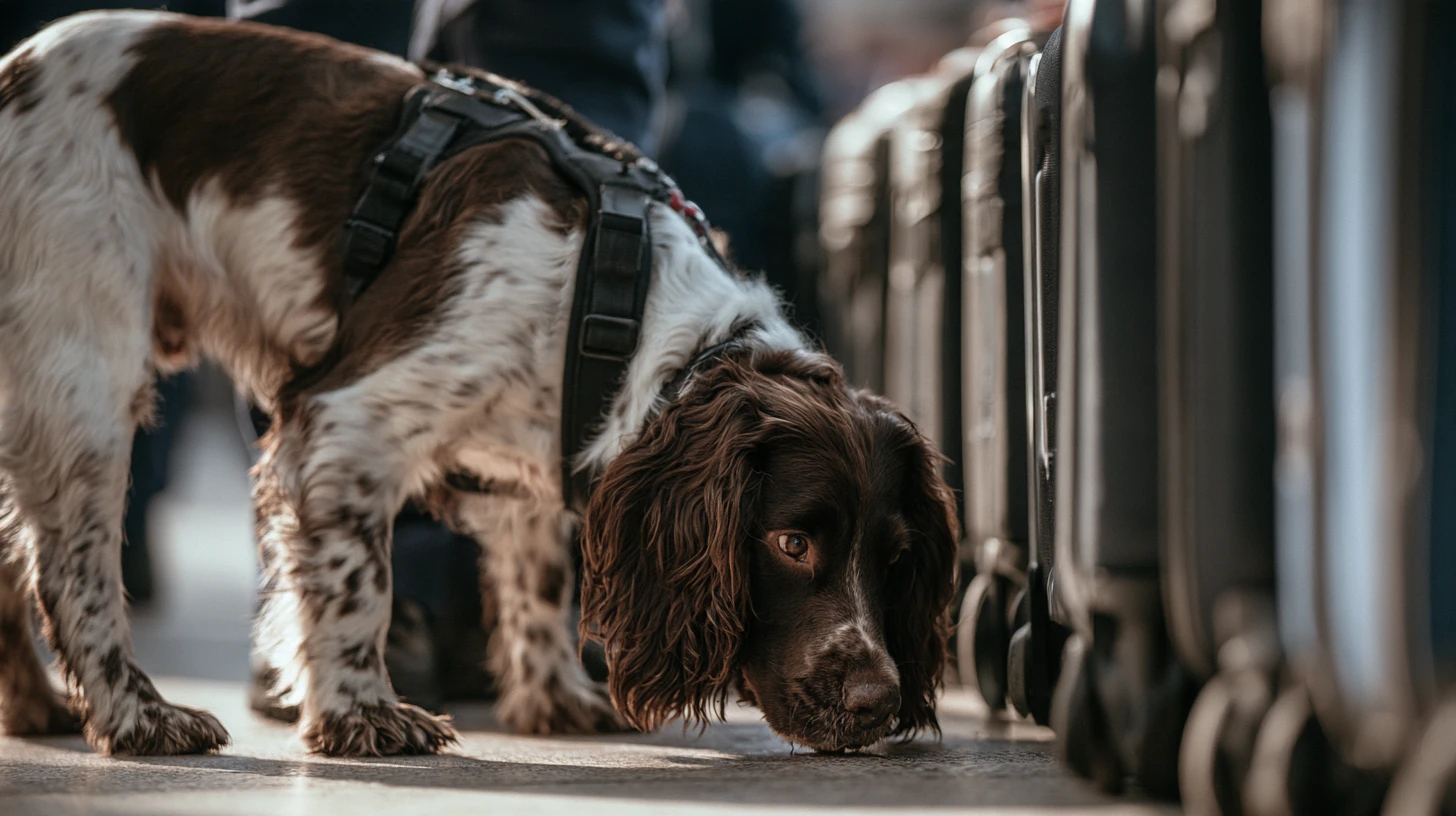
Detection dogs find things by scent: drugs, explosives, firearms, cash, tobacco, people, even bed bugs and the accelerants left after arson. The idea of a “bomb detection dog breeder” or a “narcotics dog breeder” does not match how Britain works. Police forces, the Ministry of Defence, Border Force and private security companies buy, breed or take on adult dogs and train them in-house or through contractors. Breeders contribute the raw material: working-line puppies with drive, nerve and health.
What this discipline is
A detection dog is trained to recognise a target odour and give a passive indication (usually sitting or freezing) or an active one (scratching or barking) at its source. The same dog may later learn several odours. Detection is distinct from general-purpose police work, where the dog tracks, searches for people and detains suspects, though some dogs are dual-trained.
Detection work in the UK is a job, not a title. There is no Royal Kennel Club award and no national certificate that a breeder can attach to a puppy. Operational standards are set by the employer, and in the private sector by BS 8517-2:2016, the British Standard code of practice for detection dogs.
Who trains or supplies these dogs in the UK
Police forces train their own dogs at regional centres. Most buy young adults, but a handful breed. West Midlands Police describes itself as one of five forces that breed their own dogs; its programme holds about 40 breeding females, aims for more than 100 puppies a year and supplies dogs to other forces and agencies, including the Metropolitan Police, the National Crime Agency and the Ministry of Justice. Its puppies go to volunteer fosterers from six to eight weeks until around twelve months.
The Defence Animal Training Regiment at Melton Mowbray trains around 200 military working dogs a year plus about 100 for civilian and overseas agencies; the Army states that most are purchased from the European market. Border Force takes on dogs aged between one and two years and trains them with its own staff over roughly three months. HM Revenue and Customs and other public bodies use contracted detection dog providers such as Wagtail and SES Aviation, which buy and train their own dogs.
Private security detection teams operate within the National Association of Security Dog Users (NASDU) framework and BS 8517-2. Fire and rescue services run fire investigation dogs, and a growing conservation sector uses dogs to find bats, newts and invasive species.
Breeds and lines
The breeds that dominate are working-line English Springer and Cocker Spaniels, Labradors, and for dual-purpose or explosives work German Shepherds and Belgian Shepherds (Malinois); spaniels, Labradors and Border Collies appear in conservation work. “Working line” is a real distinction: these are dogs bred from field trial, gundog or police stock for drive and nose, not from show lines bred for appearance.
Buyers in this field want hunt drive, a compulsive retrieve, environmental confidence (floors, stairs, vehicles, noise), and health. Hip and elbow scores, eye tests and breed DNA tests under the RKC Health Standard apply; for spaniels, checking for the known hereditary conditions in the line is essential because a detection dog may work for a decade.
What a buyer should ask a breeder
- Which working lines are the parents from, and have relatives gone to police, military, Border Force or contractor training?
- What health tests have both parents had, with results?
- Can I see the dam working or playing retrieve games, and assess drive in the puppies?
- How are the puppies raised: exposure to noise, surfaces and vehicles?
- Do you hold a council licence, if your breeding requires one?
Organisations sourcing dogs will assess each animal themselves. A breeder can say their lines have produced detection dogs; nobody can sell a “certified” detection dog, and a claim that a puppy is one should be treated as a warning sign.
What breeders can list here
Breeders may list their breed, working lines, health results, and any dogs from their kennel known to have gone into police, military, Border Force, contractor or conservation detection work. They may not describe puppies as detection dogs, trained dogs or certified dogs, and Canine Breeder does not supply or vet working dogs. This site is independent of every organisation named above.
If you breed drive-rich working spaniels, Labradors or shepherds of the kind that detection teams look for, list your kennel in this discipline.
Breeds used for detection dogs
Specialisations in detection dogs
- Bed bug detection dogs
- Cash and currency detection dogs
- Conservation and wildlife detection dogs
- Detection dog puppies, trainers and handler courses
- Digital storage device detection dogs
- Drugs and narcotics detection dogs
- Dry rot and building-decay detection dogs
- Explosives detection dogs
- Fire investigation and accelerant detection dogs
- Firearms and weapons detection dogs
- Food, animal-product and wildlife-trade detection dogs
- Invasive species and Japanese knotweed detection dogs
- Tobacco and illicit cigarette detection dogs
- Truffle hunting dogs