Breed dogs for detection dog puppies, trainers and handler courses? Advertise here
Buyers and trainers use this page to find breeders whose lines do this work. List your kennel free, tick the industries your dogs work in, and advertise litters and stud dogs from proven working lines.
No breeders are listed here yet, so the first profiles get the page to themselves.
- Free basic profile: your breeder or company name, website, social media, location, breeds and industries.
- Litters and stud dogs advertised in their own sections, never mixed with puppies for sale.
- Premium showcase for your services and prices, previous customers, awards, video, gallery and health certificates, with your phone and email shown to buyers.
- Sponsored articles about your breed or industry, written and published by our team.
- Featured placement at the top of this page, labelled as sponsored.
Is it free to advertise here?
Yes. A breeder profile and your litter and stud dog adverts are free. Premium profiles, featured placement and sponsored articles are optional paid extras; see pricing.
Do I need a licence to advertise puppies?
In England you need a dog breeding licence from your council if you breed three or more litters in 12 months or breed and sell dogs as a business, and Wales, Scotland and Northern Ireland have their own schemes. Licensed breeders show their licence number and issuing council on every advert. Puppies must be at least eight weeks old before they go to new homes.
Is my listing already here?
We add licensed breeders from councils' public registers. Search for your kennel name; if it is listed you can claim it and edit everything.
About detection dog puppies, trainers and handler courses
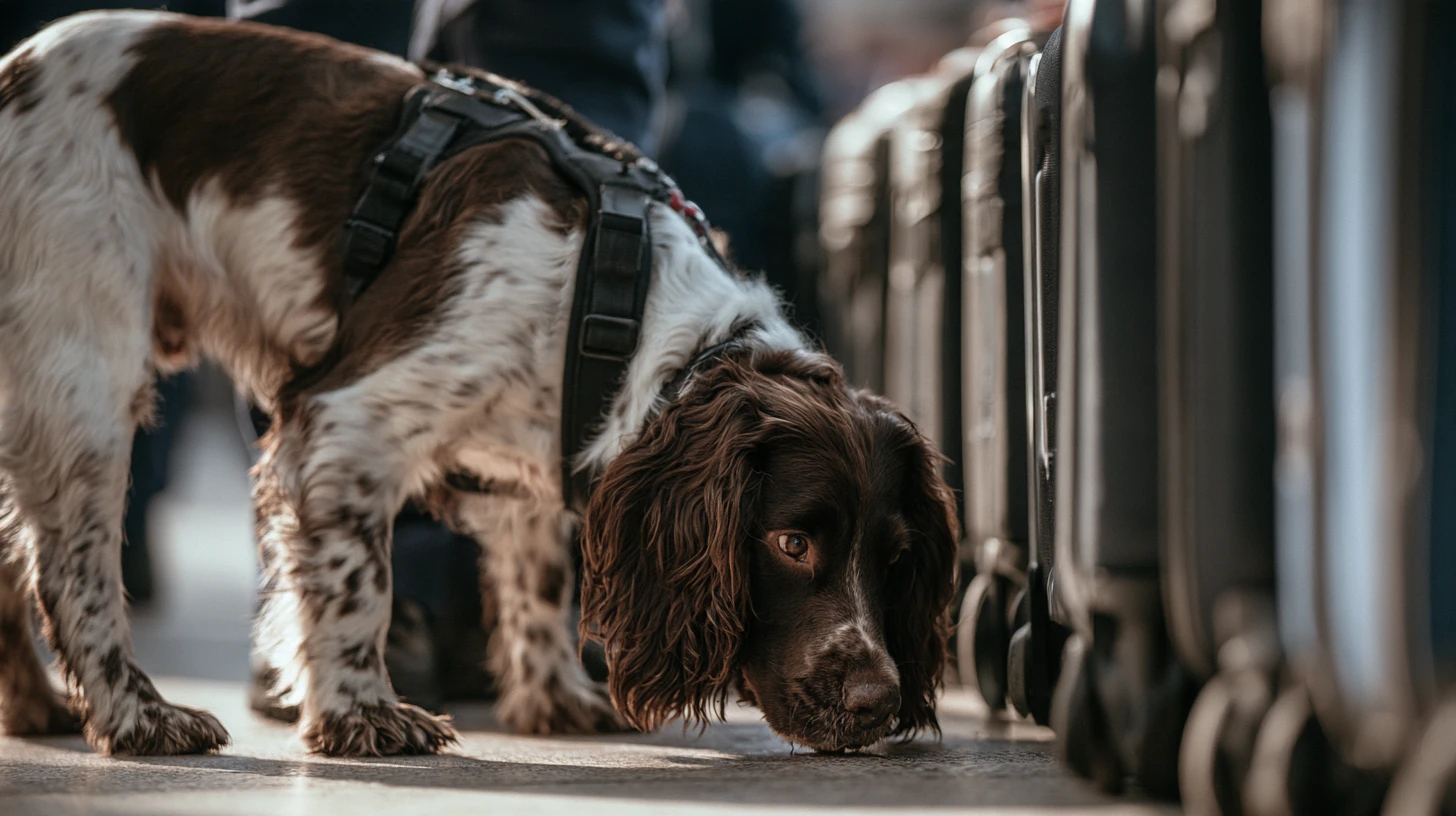
People searching for sniffer dog puppies for sale usually want one of two things: a puppy from working lines with real detection aptitude, or a route into detection work as a handler. Detection dog breeders in the UK supply puppies and young dogs; agencies, companies and trainers select them and turn them into operational teams. No breeder on this site sells a trained or certified detection dog.
What this work involves
A detection dog searches people, bags, vehicles, buildings or open ground for a target odour such as drugs, explosives, tobacco, cash, firearms or people, then shows the handler where it is. Some dogs give an active indication, scratching or pointing at the source; others a passive one, sitting and staring.
The usual path starts with a puppy from working stock, raised with plenty of new experiences and toy play. Agencies often select dogs at between 12 and 24 months, which Border Force has given as its usual selection age. The dog then trains with its handler, is assessed and, in most sectors, is relicensed every year.
Who trains and supplies these dogs in the UK
- Border Force, a law enforcement command within the Home Office, uses detector dogs at ports, airports, international rail stations and postal depots; dogs have worked at the UK border since 1978. It has said its dogs come from a host of breeders as well as Battersea Dogs Home, and that gundog breeds such as English Springer Spaniels, Cocker Spaniels, Labradors and Beagles are ideal for the work. In 2025 it deployed what the Home Office described as the world’s first dogs trained to detect the synthetic opioids fentanyl and nitazenes.
- Wagtail UK, a North Wales company, supplies detection dogs and handler training for explosives, drugs, tobacco, cash, “live” body detection, cadaver, disaster search and rescue, and conservation work. It is an accredited training centre with the Highfield awarding body and holds Home Office licences to keep drugs and explosives for dog training.
- NASDU (National Association of Security Dog Users) sets handler qualifications used in the private sector. Its detection pathways lead to Level 3 certificates for passive and proactive drug detection, pyrotechnics, tobacco, live person, victim (cadaver), fire investigation and bedbug detection, and Level 4 certificates for explosives detection. The security detection awards are built on the code of practice BS 8517-2. A NASDU detection dog course gives an industry qualification, not a legal licence.
Some employers also ask for a Security Industry Authority licence, although the SIA licenses people rather than dogs and says it does not formally recognise associations such as canine bodies.
Breeds and lines
- English Springer Spaniel and Cocker Spaniel: the backbone of UK detection work. Working spaniel puppies for detection come from field and working lines rather than show lines.
- Labrador Retriever: strong food and toy drive and a steady temperament for public places.
- English Springer x Cocker cross (Sprocker): widely used, though as a crossbreed it cannot be registered as a pedigree with the Royal Kennel Club.
- Belgian Shepherd Dog (Malinois): chosen where a larger, more robust dog is wanted, mainly for general purpose work; the prison service, for example, uses Malinois as general purpose dogs.
Buyers look for relentless hunting, possession of a toy, confidence in new places, and sound hips and elbows.
What to ask a breeder
- What have dogs from these lines gone on to do, and can you put me in touch with their handlers or trainers?
- Which health tests do both parents have, including hip and elbow scores?
- How do you test toy drive, hunting and confidence before the puppies leave?
- Do you run on young dogs to 12 months or older for agency assessment?
- Are you licensed by your council if your breeding needs it, and can I see the parents’ registration and health records?
- What happens if the dog fails selection: will you take it back?
Legal and welfare notes
In England you need a council licence if you breed three or more litters in any 12-month period and sell any of the puppies, or if you run a business that breeds and advertises dogs for sale. Breeding without a required licence can lead to an unlimited fine or up to six months in prison. Wales, Scotland and Northern Ireland have their own rules.
Training aids are regulated too. Keeping real controlled drugs for dog training needs a Home Office licence, and acquiring or keeping genuine explosives needs an explosives certificate from the police and, for storage, a licence under the Explosives Regulations 2014. Private owners should use a licensed provider. Every dog is also covered by the Animal Welfare Act 2006 duty of care.
Frequently asked questions
Can I buy a trained sniffer dog here?
No. Breeders on Canine Breeder sell puppies and young dogs from lines used for detection. Training, accreditation and licensing are done by agencies, companies and trainers.
What qualification do detection dog handlers need?
It depends on the employer. Border Force, the police and the prison service train and license their own teams. In the private sector, NASDU Level 3 and Level 4 certificates built on BS 8517-2 are widely used.
Do agencies take dogs from outside breeders and rescues?
Some do. Border Force has said its dogs come from a host of breeders and from Battersea Dogs Home, and the prison service buys from suppliers under strict procurement rules. Every dog offered is assessed for drive, health and temperament, and many are not selected.
If your dogs come from working lines used for detection, list your breeding on Canine Breeder and tell trainers and agencies what your lines have achieved.
Breeds used for detection dog puppies, trainers and handler courses
Official organisations and sources
- NASDU Search and Detection – Learning Programmes (Qualifications)
- Wagtail UK – Operational Teams
- Border Force
- BS 8517-2:2016 Security dogs – Code of practice for the use of detection dogs (BSI)
- Dog breeding licence (England) (GOV.UK)
- Animal Welfare (Licensing of Activities Involving Animals) (England) Regulations 2018
- Controlled drugs: domestic licences (Home Office)
- HSE – Explosives authorisations and licensing
External sites open in a new tab. Canine Breeder is not affiliated with these organisations.
More in detection dogs
- Detection dogs
- Bed bug detection dogs
- Cash and currency detection dogs
- Conservation and wildlife detection dogs
- Digital storage device detection dogs
- Drugs and narcotics detection dogs
- Dry rot and building-decay detection dogs
- Explosives detection dogs
- Fire investigation and accelerant detection dogs
- Firearms and weapons detection dogs
- Food, animal-product and wildlife-trade detection dogs
- Invasive species and Japanese knotweed detection dogs
- Tobacco and illicit cigarette detection dogs
- Truffle hunting dogs