Breed dogs for tobacco and illicit cigarette detection dogs? Advertise here
Buyers and trainers use this page to find breeders whose lines do this work. List your kennel free, tick the industries your dogs work in, and advertise litters and stud dogs from proven working lines.
No breeders are listed here yet, so the first profiles get the page to themselves.
- Free basic profile: your breeder or company name, website, social media, location, breeds and industries.
- Litters and stud dogs advertised in their own sections, never mixed with puppies for sale.
- Premium showcase for your services and prices, previous customers, awards, video, gallery and health certificates, with your phone and email shown to buyers.
- Sponsored articles about your breed or industry, written and published by our team.
- Featured placement at the top of this page, labelled as sponsored.
Is it free to advertise here?
Yes. A breeder profile and your litter and stud dog adverts are free. Premium profiles, featured placement and sponsored articles are optional paid extras; see pricing.
Do I need a licence to advertise puppies?
In England you need a dog breeding licence from your council if you breed three or more litters in 12 months or breed and sell dogs as a business, and Wales, Scotland and Northern Ireland have their own schemes. Licensed breeders show their licence number and issuing council on every advert. Puppies must be at least eight weeks old before they go to new homes.
Is my listing already here?
We add licensed breeders from councils' public registers. Search for your kennel name; if it is listed you can claim it and edit everything.
About tobacco and illicit cigarette detection dogs
A tobacco detection dog finds smuggled and fake cigarettes and hand-rolling tobacco hidden in shops, storage units, vehicles and freight. In the UK, Trading Standards services and Border Force use these dogs against the illicit tobacco trade. Trading Standards teams often bring in commercial detection dog teams for shop operations. Breeders on this directory supply puppies and young dogs with the aptitude for this work. They do not supply trained or certified detection dogs.
What this work involves
A cigarette sniffer dog searches shop floors, stock rooms, flats, cars and lorries for the odour of tobacco. Illicit stock is often hidden in purpose-built hiding places, such as false walls behind shop counters, spaces under floors, or hides built into furniture and vehicles. A trading standards sniffer dog indicates where the scent is strongest, so officers can open the hiding place and seize the goods.
The work is fast-paced and repetitive, and it often covers several premises in a day during joint operations. Dogs need a strong hunting drive, stamina, and the confidence to work in cramped, cluttered and sometimes tense places with members of the public nearby.
Who trains and supplies these dogs in the UK
Trading Standards services in local councils carry out much of the enforcement against illicit tobacco in shops, and often bring in specialist detection dog teams for operations. Since January 2021, HMRC and Trading Standards have worked together on Operation CeCe to disrupt the retail sale of illicit tobacco in England, Wales and Scotland. HMRC’s 2024 illicit tobacco strategy, Stubbing out the problem, committed to increasing funding for the operation. In Northern Ireland, Trading Standards teams are not responsible for enforcing illicit tobacco sales.
Wagtail UK is a specialist detection dog company. It has provided tobacco detection dog teams to Trading Standards for more than ten years and is a corporate affiliate member of the Chartered Trading Standards Institute. It states that in a five-year period its dogs found more than 123 million illegal cigarettes and more than 55 tonnes of illegal hand-rolling tobacco. Wagtail says dogs for its work should ideally be of a working breed and aged between 11 months and three years, and it trains its dogs in-house. It also runs a Tobacco Detection Dog Handler Course.
Border Force trains its multi-skilled detector dogs to find cigarettes and hand-rolling tobacco at seaports, airports, international rail stations and postal depots. It gets young dogs through a network of contacts, dogs given by the public and animal welfare establishments such as Battersea Dogs Home.
The supply model is commercial. Operators recruit young dogs, train them in-house and hire out dog-and-handler teams. An illicit tobacco dog is trained by the operator, not the breeder.
Breeds and lines
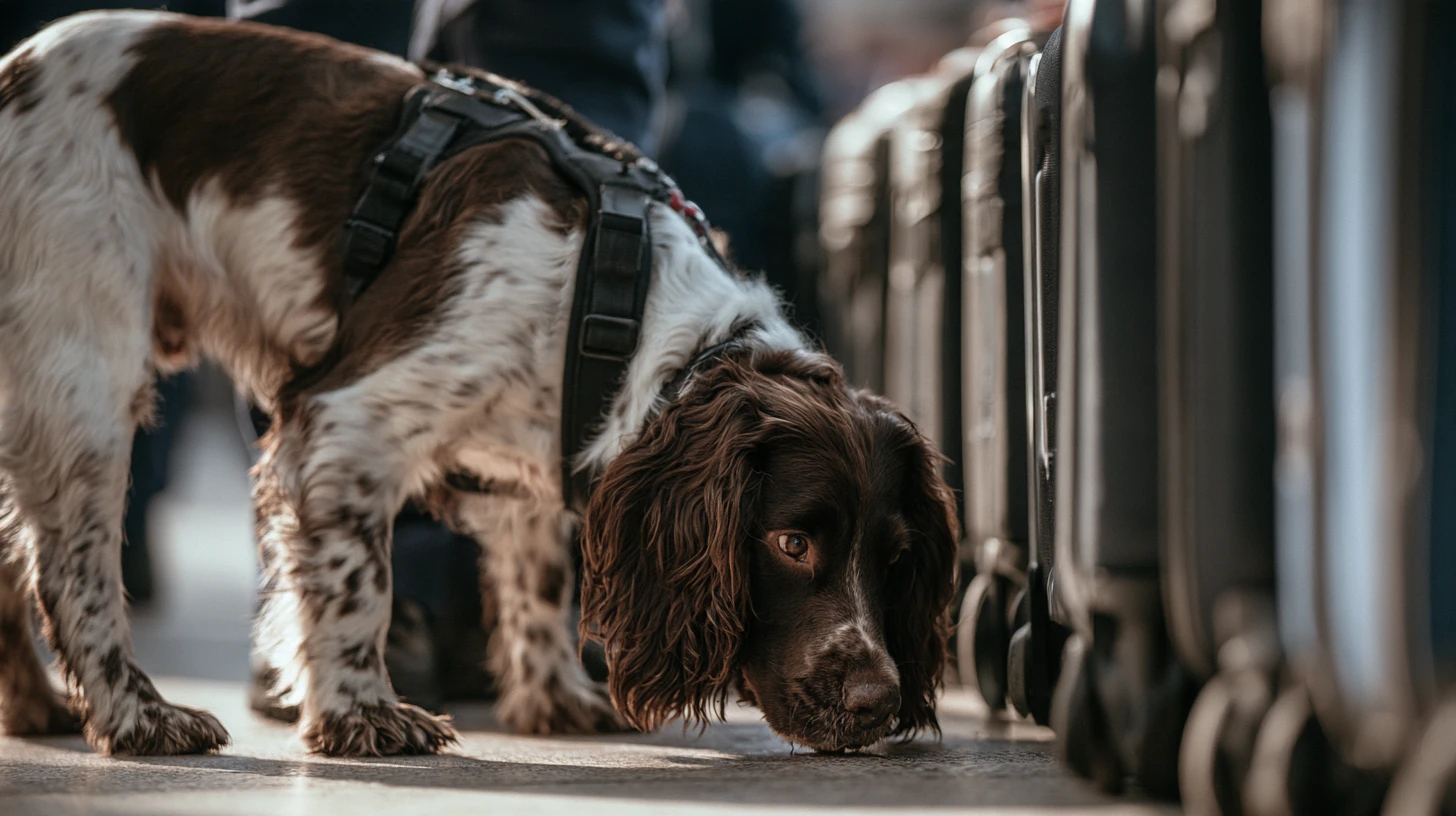
English Springer Spaniels, Labrador Retrievers and Cocker Spaniels do most UK tobacco work, generally from working lines. Border Force also names the Beagle among its most common detection breeds. Spaniels are small and agile, which suits tight spaces under counters and inside vehicles. Labradors bring steadiness and stamina for long freight searches. Each dog’s drive and nerve count for more than breed. A dog that is upset by shouting, slamming doors or strangers will not suit the job.
What to ask a breeder
- Are the parents from working lines, and has any dog you bred gone on to detection work with a commercial operator or agency?
- What health tests have the parents had, and can I see the hip, elbow, eye and DNA results?
- How do you socialise puppies to cluttered indoor spaces, vehicles, stairs and strangers?
- How do you assess toy drive and persistence in a search game?
- Do you place puppies with working homes, and will you take a dog back if needed?
Frequently asked questions
Who provides tobacco detection dogs for Trading Standards raids?
Local Trading Standards services often bring in specialist commercial dog teams, such as those run by Wagtail UK. Operation CeCe, run by HMRC and Trading Standards since 2021, supports this enforcement.
Are illicit tobacco dogs also used to find illegal vapes?
Some are. In 2023 Wagtail reported training a springer spaniel, Pippa, with Trading Standards and law enforcement partners to find illegal vapes. Trading Standards also enforce the rules on the sale of vapes.
Can I buy a trained tobacco detection dog from a breeder?
No. Breeders on this directory supply puppies and young dogs. Commercial operators and Border Force select and train their own dogs.
If dogs from your breeding work in tobacco detection with Trading Standards teams, Border Force or commercial operators, we would be glad to list you. Add your kennel and tell buyers plainly about your working lines, your health testing and how you place puppies.
Breeds used for tobacco and illicit cigarette detection dogs
More in detection dogs
- Detection dogs
- Bed bug detection dogs
- Cash and currency detection dogs
- Conservation and wildlife detection dogs
- Detection dog puppies, trainers and handler courses
- Digital storage device detection dogs
- Drugs and narcotics detection dogs
- Dry rot and building-decay detection dogs
- Explosives detection dogs
- Fire investigation and accelerant detection dogs
- Firearms and weapons detection dogs
- Food, animal-product and wildlife-trade detection dogs
- Invasive species and Japanese knotweed detection dogs
- Truffle hunting dogs