Breed dogs for firearms and weapons detection dogs? Advertise here
Buyers and trainers use this page to find breeders whose lines do this work. List your kennel free, tick the industries your dogs work in, and advertise litters and stud dogs from proven working lines.
No breeders are listed here yet, so the first profiles get the page to themselves.
- Free basic profile: your breeder or company name, website, social media, location, breeds and industries.
- Litters and stud dogs advertised in their own sections, never mixed with puppies for sale.
- Premium showcase for your services and prices, previous customers, awards, video, gallery and health certificates, with your phone and email shown to buyers.
- Sponsored articles about your breed or industry, written and published by our team.
- Featured placement at the top of this page, labelled as sponsored.
Is it free to advertise here?
Yes. A breeder profile and your litter and stud dog adverts are free. Premium profiles, featured placement and sponsored articles are optional paid extras; see pricing.
Do I need a licence to advertise puppies?
In England you need a dog breeding licence from your council if you breed three or more litters in 12 months or breed and sell dogs as a business, and Wales, Scotland and Northern Ireland have their own schemes. Licensed breeders show their licence number and issuing council on every advert. Puppies must be at least eight weeks old before they go to new homes.
Is my listing already here?
We add licensed breeders from councils' public registers. Search for your kennel name; if it is listed you can claim it and edit everything.
About firearms and weapons detection dogs
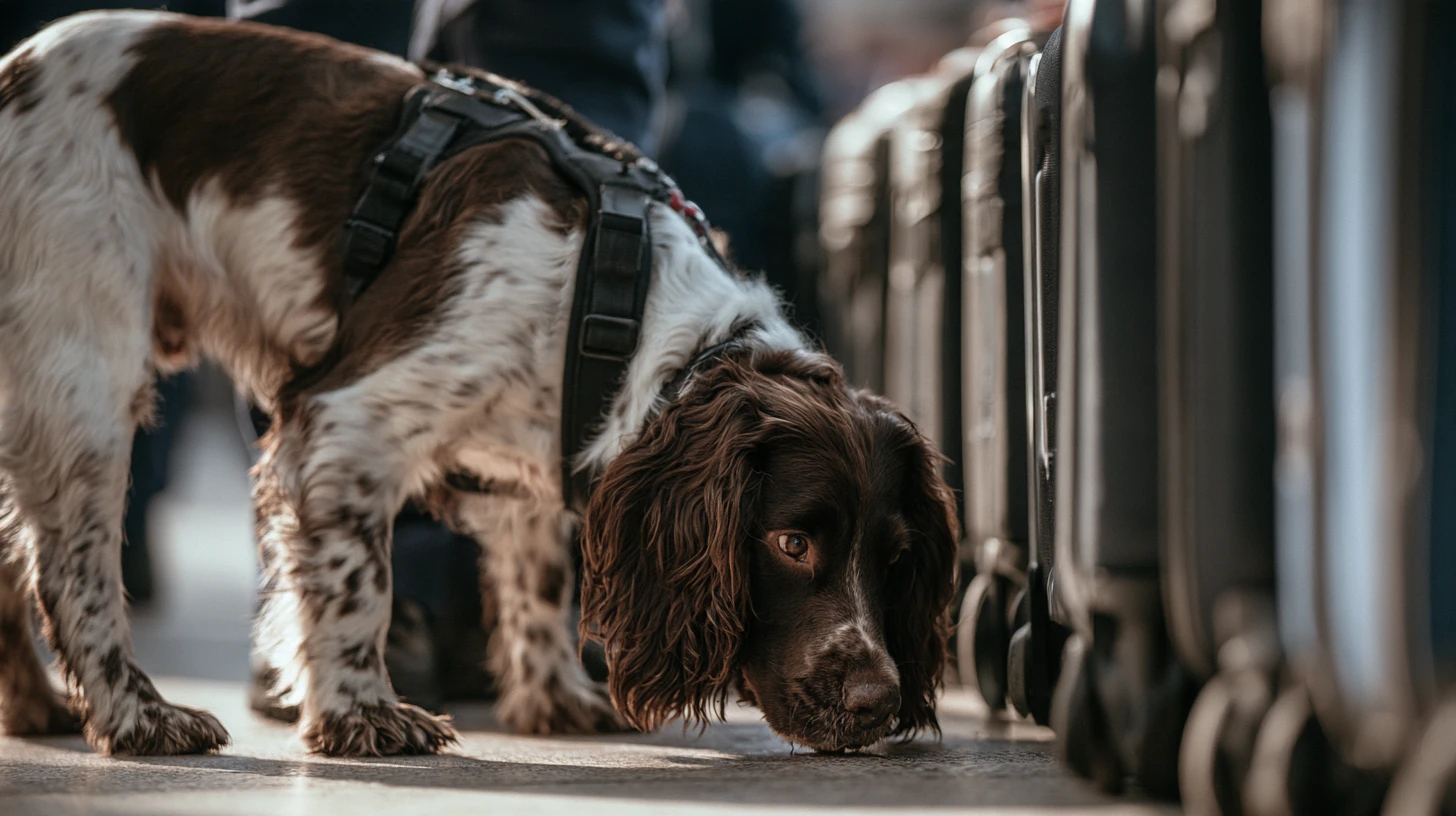
A firearms detection dog is trained to find the scent of guns, ammunition and gun parts hidden in vehicles, freight, luggage and buildings. In the UK these dogs are trained by Border Force, police forces and a few specialist companies. Breeders listed on this directory supply puppies and young dogs with the aptitude for this work. They do not supply trained or certified detection dogs.
What this work involves
A gun sniffer dog searches systematically along vehicles, containers, parcels, rooms and open ground, and gives a trained indication when it finds the target odour. Firearms dogs are often taught a passive indication, such as a freeze or a sit, rather than scratching at the source, because the item may be dangerous or needed as evidence.
Dogs learn the odours given off by firearms and ammunition, and are trained on real items under controlled conditions by organisations that can lawfully hold them. The work suits a dog with high toy drive, the stamina for long searches, and the confidence to work in noisy ports, cramped vehicles and derelict buildings. Police forces may deploy a weapons search dog after a shooting, during a warrant or to search open land for discarded weapons.
Who trains and supplies these dogs in the UK
Border Force runs a national detector dog programme within the Home Office. Its 2013 guide to the programme describes multi-skilled dogs trained to find drugs, tobacco, cash, products of animal origin, firearms and people at seaports, airports, international rail stations and postal depots. It gets dogs through a network of contacts, dogs given by the public and animal welfare establishments such as Battersea Dogs Home. It usually selects them at 12 to 24 months and trains them with its own instructors or on a police dog training course.
Police forces run their own dog units. Official police guidance lists cash, drugs and firearms detection dogs among police dog roles, alongside digital detection dogs that find hidden electronic devices. Specialist search dogs are often spaniels or Labradors. The same guidance says police dogs are generally obtained from private kennels, and that people can offer a dog to their local force’s dog unit. Some forces have also taken on rescue dogs for search work, and forces train the dogs with their own instructors. Sweep, a working Cocker Spaniel with Lothian and Borders Police and then Police Scotland, was trained to detect drugs, firearms, cash and poison. According to PDSA, his finds included six shotguns, three handguns, two rifles, 3,500 shotgun cartridges and 1,000 rounds of ammunition. He received the PDSA Order of Merit in 2017.
Wagtail UK is a detection dog company established in 2003. It provides detection dogs and related services to government agencies such as Border Force, HMRC, police forces, Trading Standards and the armed forces. It lists firearms among the odours its dogs detect, and its event detection dog teams work at arenas and stadiums.
The supply model is simple. Agencies and companies buy or accept young adult dogs, assess them and train them to operational standard themselves. The breeder’s role is to produce sound, healthy, driven dogs that might be selected.
Breeds and lines
Border Force names the English Springer Spaniel, the Cocker Spaniel, the Labrador Retriever and the Beagle as its most common detection breeds. It says gundog breeds suit detection work because they have a natural instinct to hunt and retrieve. For the same reason, working (field-bred) lines are often preferred over show lines: breeding for hunting and retrieving tends to produce the persistent search drive that detection training builds on.
The individual matters more than the pedigree. Look for boldness on slippery floors and open stairs, a strong retrieve, sound hips and elbows, and a sociable temperament with people.
What to ask a breeder
- Are the parents from working lines, and have any relatives been selected by police, Border Force or commercial detection programmes?
- What health tests have both parents had, such as hip and elbow scores under the BVA/Kennel Club schemes, eye certificates and breed-relevant DNA tests?
- How do you assess puppies for toy drive, retrieve and confidence in unfamiliar places?
- Will you take a dog back, or help rehome it, if it is not selected for detection work?
- Are you licensed by your local council where your breeding activity requires it?
Legal and welfare notes
Under the Firearms Act 1968 it is an offence to possess firearms or ammunition without the right certificate or authority, unless an exemption applies. Section 1 covers firearm certificates, section 2 shotgun certificates and section 5 prohibited weapons. Training a dog on real firearms or ammunition therefore needs lawful authority to hold them, which is one reason this training sits with police, Border Force and specialist operators rather than private owners. Anyone keeping a working dog in England or Wales has a duty under the Animal Welfare Act 2006 to meet its welfare needs, and Scotland and Northern Ireland have equivalent laws.
Frequently asked questions
Can I buy a trained firearms detection dog from a breeder?
No. Breeders supply puppies and young dogs. Border Force, police forces and specialist companies do the firearms detection training, on dogs they select themselves. A good breeder can tell you whether their lines have produced dogs that went on to this work.
What breed makes the best gun sniffer dog?
There is no single best breed. Working-line English Springer Spaniels, Labradors and Cocker Spaniels are common in UK programmes because of their drive and retrieve. Individual temperament and health matter more than breed.
How old are dogs when they start training?
Border Force says it usually selects dogs between 12 and 24 months old. Official police guidance says formal training for police dogs usually starts between one and two years old. Each dog is assessed for drive, confidence and health first.
If you breed working spaniels or Labradors and dogs from your lines work in firearms detection, we would like to hear from you. List your kennel on caninebreeder.co.uk and tell buyers plainly about your lines, your health testing and how you place puppies.
Breeds used for firearms and weapons detection dogs
More in detection dogs
- Detection dogs
- Bed bug detection dogs
- Cash and currency detection dogs
- Conservation and wildlife detection dogs
- Detection dog puppies, trainers and handler courses
- Digital storage device detection dogs
- Drugs and narcotics detection dogs
- Dry rot and building-decay detection dogs
- Explosives detection dogs
- Fire investigation and accelerant detection dogs
- Food, animal-product and wildlife-trade detection dogs
- Invasive species and Japanese knotweed detection dogs
- Tobacco and illicit cigarette detection dogs
- Truffle hunting dogs