Breed dogs for explosives detection dogs? Advertise here
Buyers and trainers use this page to find breeders whose lines do this work. List your kennel free, tick the industries your dogs work in, and advertise litters and stud dogs from proven working lines.
No breeders are listed here yet, so the first profiles get the page to themselves.
- Free basic profile: your breeder or company name, website, social media, location, breeds and industries.
- Litters and stud dogs advertised in their own sections, never mixed with puppies for sale.
- Premium showcase for your services and prices, previous customers, awards, video, gallery and health certificates, with your phone and email shown to buyers.
- Sponsored articles about your breed or industry, written and published by our team.
- Featured placement at the top of this page, labelled as sponsored.
Is it free to advertise here?
Yes. A breeder profile and your litter and stud dog adverts are free. Premium profiles, featured placement and sponsored articles are optional paid extras; see pricing.
Do I need a licence to advertise puppies?
In England you need a dog breeding licence from your council if you breed three or more litters in 12 months or breed and sell dogs as a business, and Wales, Scotland and Northern Ireland have their own schemes. Licensed breeders show their licence number and issuing council on every advert. Puppies must be at least eight weeks old before they go to new homes.
Is my listing already here?
We add licensed breeders from councils' public registers. Search for your kennel name; if it is listed you can claim it and edit everything.
About explosives detection dogs
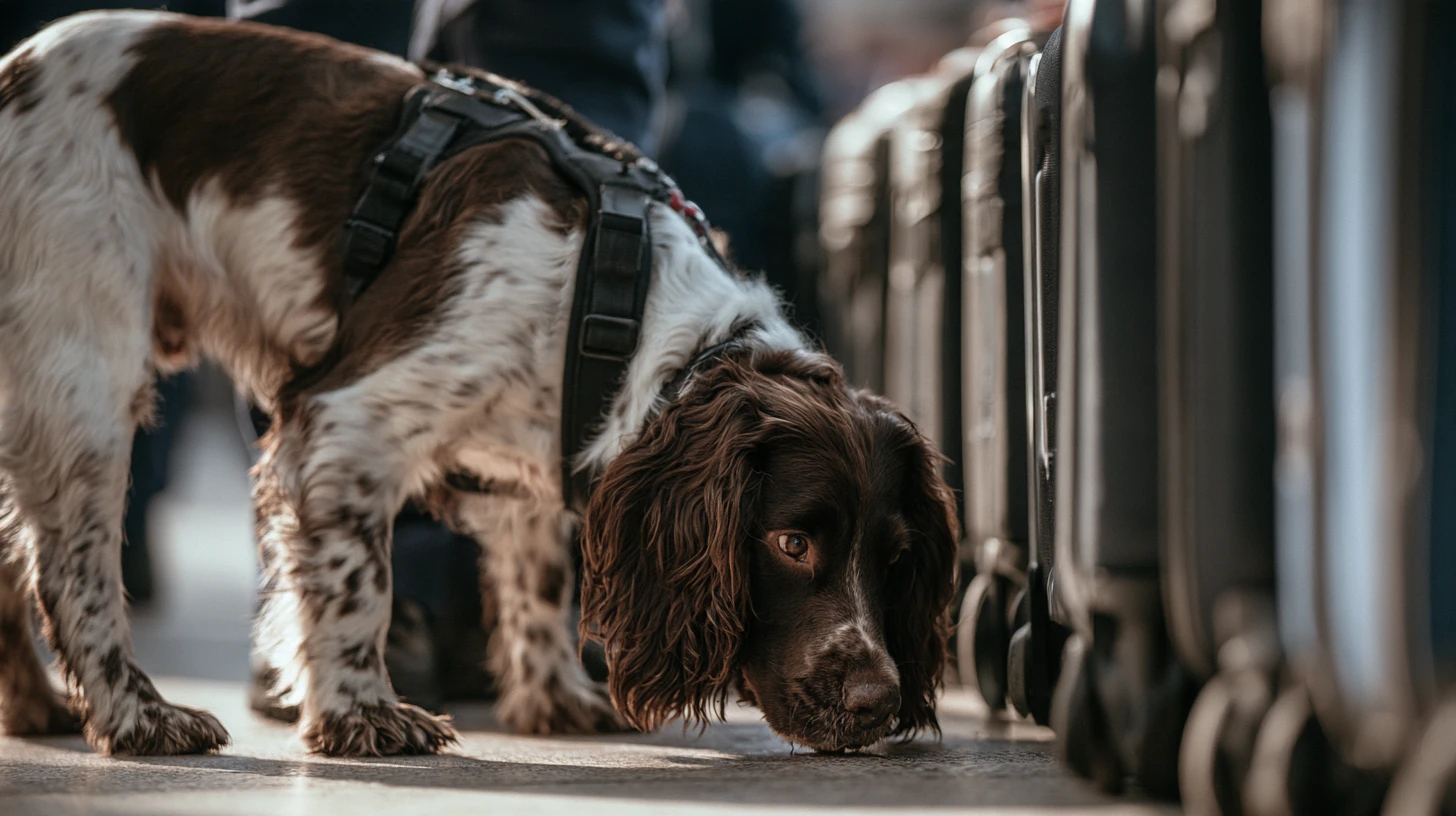
An explosives detection dog searches buildings, vehicles, routes, venues and personal effects for the odour of explosive material and indicates where it is. In the UK these dogs work for the armed forces, police and private security contractors. Breeders on this site sell puppies and young dogs, not trained detection dogs: the forces and companies that use them train their own or buy from specialist suppliers.
What this work involves
An explosive search dog in the UK works methodically through buildings, compounds, vehicles, roads, railways and personal effects, often off the lead, and gives a trained indication at the source without disturbing it. In the Army’s 1st Military Working Dog Regiment, arms and explosives search dogs look for weapons, explosives and ammunition, and high assurance search dogs provide a stand-off capability to detect improvised explosive devices during high-risk searches. In private security, site and event operators hire explosives detection dog teams to search their premises.
The job needs strong search and play drive, plus stamina and nerve around noise and crowds.
Who trains and supplies these dogs in the UK
The Defence Animal Training Regiment (DATR), at Remount Barracks, Melton Mowbray, is a joint-service unit with personnel from several Army regiments and the RAF Police. Its Canine Training Squadron delivers trained military working dogs to customers across the Ministry of Defence. The Army says the UK Armed Forces need more than 200 trained military working dogs a year and that most types are currently bought on the European market.
Police forces keep their own dog teams. A 2014 Ministry of Defence Police publication said its dogs, including arms and explosives search dogs, were provided by the Defence Animal Centre at Melton Mowbray, where handlers and dogs were trained. The Civil Nuclear Constabulary says it maintains one of the largest cohorts of explosive detection dogs in the UK, with all its dog teams trained to nationally recognised standards.
Wagtail UK, established in 2003, provides detection dogs and services to UK Border Force, HM Revenue and Customs, police, Trading Standards and the armed forces, including explosives detection. It says it is licensed by the Home Office to store and keep explosives and drugs for dog training.
NASDU, the National Association of Security Dog Users, promotes standards and training in the private detection dog sector and is an approved centre for accredited qualifications. The Security Industry Authority’s guidance notes that the NASDU Standard includes BS 8517-2, the British Standard code of practice for the use of detection dogs.
Private teams can also be accredited under the voluntary National Canine Training and Accreditation Scheme for private industry (NCTAS-P), developed by the Home Office, Counter Terrorism Policing and the National Protective Security Authority. Each dog-and-handler team is assessed by an independent assessor, and accreditation lasts one year.
The supply model: forces and companies buy young or adult dogs and train them, and UK breeders of working gundog and Malinois lines compete with European suppliers.
Breeds and lines
The Army says most arms and explosives search dogs in 1st Military Working Dog Regiment are gundog breeds such as Labradors and Springer Spaniels, while most of its high assurance search dogs are herding breeds such as Belgian Malinois and Dutch Herders. In Royal Kennel Club terms that means the Retriever (Labrador), the Spaniel (English Springer) and the Belgian Shepherd Dog (Malinois); the Royal Kennel Club notes that the Malinois is widely used by police and armed forces.
NCTAS-P selection guidance looks for search drive and a willingness to work, a good temperament that is bold but not aggressive, and the ability to adapt quickly to different environments. Lines bred for work in the field, rather than for the show ring, are the most likely to show that drive.
What to ask a breeder
- Have dogs from your lines been bought by the military, police or detection companies, and at what age?
- Can you show the parents hunting or retrieving, and how toy-driven are they?
- How do the puppies cope with stairs, grating, slippery floors, vehicles and sudden noise?
- What health tests have the parents had? The Royal Kennel Club lists the BVA/RKC hip and elbow schemes and the eye scheme for English Springers and Malinois.
- Do you hold a local authority breeding licence where the law requires one?
- What is your return policy if a buyer’s assessment finds a young dog unsuitable?
Legal and welfare notes
BS 8517-2 is the British Standard code of practice for detection dogs, and NCTAS-P may be used alongside it. Detection dog work is not itself on the Security Industry Authority’s list of licensable activities, but a handler whose role includes licensable activity such as security guarding or door supervision needs the relevant SIA licence under the Private Security Industry Act 2001. Real explosives used as training aids fall under the Explosives Regulations 2014, which require authorisation to acquire, keep and store explosives. In England and Wales anyone responsible for a dog has a duty of care under the Animal Welfare Act 2006, and the Animal Health and Welfare (Scotland) Act 2006 imposes an equivalent duty in Scotland.
Frequently asked questions
Can I buy a trained bomb sniffer dog?
Not from this site. Trained explosives teams are supplied as a service by security companies, and the military and police train their own dogs. Breeders sell puppies or young dogs with aptitude, not trained or certified detection dogs.
Do breeders sell directly to the military?
The Army says most types of military working dog are currently bought on the European market, so UK breeders should not expect regular sales to Defence. Any purchase depends on the buyer’s own assessment of the dog.
What happens to dogs that fail assessment?
Wagtail UK says it rehomes both ex-working dogs and dogs that have not made the grade. HM Prison and Probation Service policy, for example, says a dog found unsuitable after purchase should be returned to the previous owner or breeder with a refund where appropriate or previously agreed, or rehomed.
If your working springers, Labradors or Malinois have gone into search and detection work, or your lines have the hunt drive it demands, list your kennel on Canine Breeder so buyers and handlers can find you.
Breeds used for explosives detection dogs
More in detection dogs
- Detection dogs
- Bed bug detection dogs
- Cash and currency detection dogs
- Conservation and wildlife detection dogs
- Detection dog puppies, trainers and handler courses
- Digital storage device detection dogs
- Drugs and narcotics detection dogs
- Dry rot and building-decay detection dogs
- Fire investigation and accelerant detection dogs
- Firearms and weapons detection dogs
- Food, animal-product and wildlife-trade detection dogs
- Invasive species and Japanese knotweed detection dogs
- Tobacco and illicit cigarette detection dogs
- Truffle hunting dogs