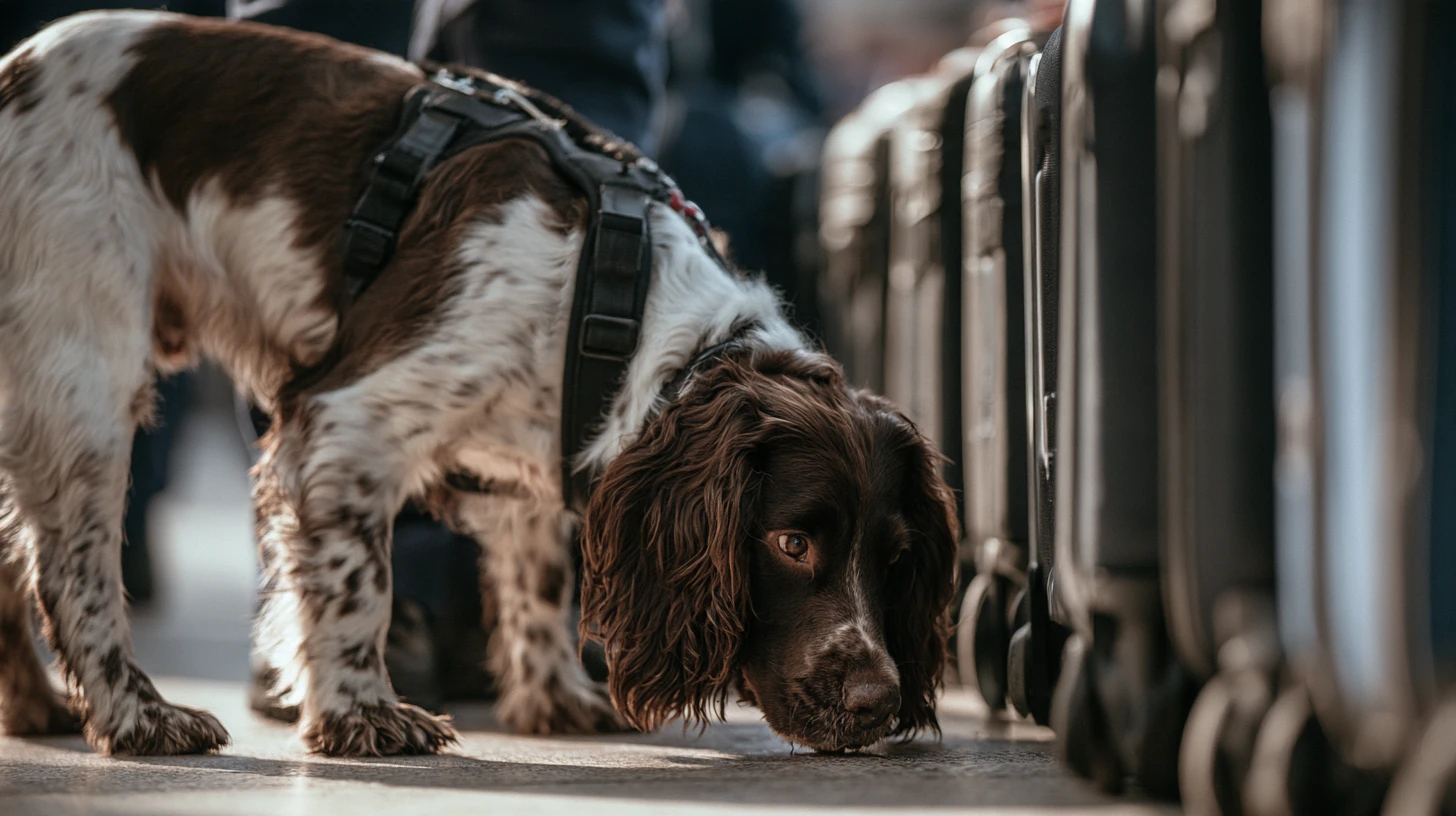
Breed dogs for conservation and wildlife detection dogs? Advertise here
Buyers and trainers use this page to find breeders whose lines do this work. List your kennel free, tick the industries your dogs work in, and advertise litters and stud dogs from proven working lines.
No breeders are listed here yet, so the first profiles get the page to themselves.
- Free basic profile: your breeder or company name, website, social media, location, breeds and industries.
- Litters and stud dogs advertised in their own sections, never mixed with puppies for sale.
- Premium showcase for your services and prices, previous customers, awards, video, gallery and health certificates, with your phone and email shown to buyers.
- Sponsored articles about your breed or industry, written and published by our team.
- Featured placement at the top of this page, labelled as sponsored.
Is it free to advertise here?
Yes. A breeder profile and your litter and stud dog adverts are free. Premium profiles, featured placement and sponsored articles are optional paid extras; see pricing.
Do I need a licence to advertise puppies?
In England you need a dog breeding licence from your council if you breed three or more litters in 12 months or breed and sell dogs as a business, and Wales, Scotland and Northern Ireland have their own schemes. Licensed breeders show their licence number and issuing council on every advert. Puppies must be at least eight weeks old before they go to new homes.
Is my listing already here?
We add licensed breeders from councils' public registers. Search for your kennel name; if it is listed you can claim it and edit everything.
About conservation and wildlife detection dogs
A conservation detection dog is trained to find protected species, their droppings (scats) or their dead bodies, so that ecologists can survey wildlife more accurately. In the UK, wildlife detection dogs have been used to find great crested newts, hedgehogs and dead bats. Dogs have also been trained to find pine marten droppings and to detect water voles, which are hard to survey by eye. Breeders on this directory supply puppies and young dogs with the aptitude for scent work. They do not supply trained or certified detection dogs.
What this work involves
An ecology survey dog searches a set area and indicates calmly when it finds the target odour. The area might be ponds and the land around them, hedgerows and field edges, or the ground beneath structures. The ecologist records the find. Where needed, a surveyor with the right licence handles the animal.
A great crested newt dog can help find newts in hiding places that are hard to check by eye. Conservation Dogs describes its dog Rocky as the world’s first scientifically proven great crested newt detection dog. A hedgehog detection dog can find animals in thick cover. In research led by Hartpury University and supported by the People’s Trust for Endangered Species (PTES), a rescue springer spaniel called Henry found hedgehogs in tall vegetation and completely hidden from view. He did not miss any animal that a thermal camera also detected. A bat carcass detection dog searches for dead bats, for example around wind turbines, where people easily miss such small bodies. Louise Wilson of Conservation K9 Consultancy says she trained the UK’s first bat carcass detection dog in 2010.
Dogs working near live protected animals must be under close control and trained not to touch, chase or disturb them.
Who trains and supplies these dogs in the UK
Conservation K9 Consultancy was founded by Louise Wilson. Its services include wildlife detection and monitoring, wildlife crime detection, biosecurity detection to keep rodents away from sensitive sites such as rodent-free islands, and training and consultancy. Henry, the dog in the PTES-supported hedgehog research, is Louise Wilson’s rescue springer spaniel. The company lists Hartpury University, PTES, the British Hedgehog Preservation Society, The Mammal Society and Shropshire Wildlife Trust among its associates.
Conservation Dogs is the sister company of Wagtail UK. It trains specialist detection dogs for wildlife conservation and wildlife crime detection, including scat surveys, carcass searches and surveys for particular species.
CIEEM, the Chartered Institute of Ecology and Environmental Management, is the professional body for ecologists. It has published articles by people working in the field on standards for conservation detection dogs. These include a 2022 piece by Louise Wilson and Angela Winstanley on handler skills, choosing dogs and welfare. In 2026 the first edition of Wildlife Detection Dogs for Ecological Surveys and Conservation Research: UK Good Practice Guidelines, developed by Louise Wilson, Nikki Glover and Willow West, was published and endorsed by The Mammal Society. The Mammal Society says handler competence cannot be shown by attending a short training course alone.
The supply model is small-scale and commercial. Consultancies choose their own dogs, including rescue dogs such as Henry. They train them in-house and provide dog-and-handler teams to ecologists, conservation organisations and others.
Breeds and lines
There is no fixed list of breeds. Gundog breeds such as springer and Cocker Spaniels and Labradors are often used, and rescue dogs such as Henry have done well. The 2022 CIEEM article says no single breed or trait guarantees success. It says persistent, bold dogs are preferred and a strong urge to chase prey is a problem, because the dogs meet many free-ranging prey animals. It adds that dogs must not be fearful or anxious.
What to ask a breeder
- How do the parents behave around livestock, wildlife and other animals, and has either shown strong chase behaviour?
- Have any dogs from your lines gone on to scent work, detection or conservation roles?
- What health testing have the parents had, including hips, elbows, eyes and relevant DNA tests?
- How do you build self-control and toy drive in young puppies?
- Will you take a dog back or help rehome it if it is not suited to working life?
Legal and welfare notes
Surveys involving protected species come under the Wildlife and Countryside Act 1981. In England and Wales they also come under the Conservation of Habitats and Species Regulations 2017, and in Scotland under the Conservation (Natural Habitats, &c.) Regulations 1994. Great crested newts, for example, are European protected species. It is an offence to deliberately capture, injure or disturb them, or to damage or destroy their breeding sites or resting places. Survey work that would otherwise break these rules needs a licence. Water voles are protected from being disturbed while they are in a place they use for shelter or protection. Dogs must not disturb protected animals. This is why good practice stresses close control, and why licensed ecologists handle any animals found. Handlers must also meet their own dog’s welfare needs under the Animal Welfare Act 2006 and equivalent laws elsewhere in the UK.
Frequently asked questions
Can a dog be used in a great crested newt survey?
Yes. Trained dogs have been used to find great crested newts. The survey must be run by ecologists with the right licence, and the dog must not disturb or harm the animals.
What is the best breed for a conservation detection dog in the UK?
There is no single best breed. Spaniels and Labradors are often used, and some successful dogs, such as Henry, are rescues. A low urge to chase and a strong drive for a toy matter more than pedigree.
Can I buy a trained wildlife detection dog from a breeder?
No. Breeders supply puppies and young dogs. Conservation consultancies choose and train their own dogs.
If dogs from your breeding work in conservation and wildlife detection, we would like to include you. List your kennel and describe your lines, your health testing and how you place puppies, including with working homes.
Breeds used for conservation and wildlife detection dogs
More in detection dogs
- Detection dogs
- Bed bug detection dogs
- Cash and currency detection dogs
- Detection dog puppies, trainers and handler courses
- Digital storage device detection dogs
- Drugs and narcotics detection dogs
- Dry rot and building-decay detection dogs
- Explosives detection dogs
- Fire investigation and accelerant detection dogs
- Firearms and weapons detection dogs
- Food, animal-product and wildlife-trade detection dogs
- Invasive species and Japanese knotweed detection dogs
- Tobacco and illicit cigarette detection dogs
- Truffle hunting dogs